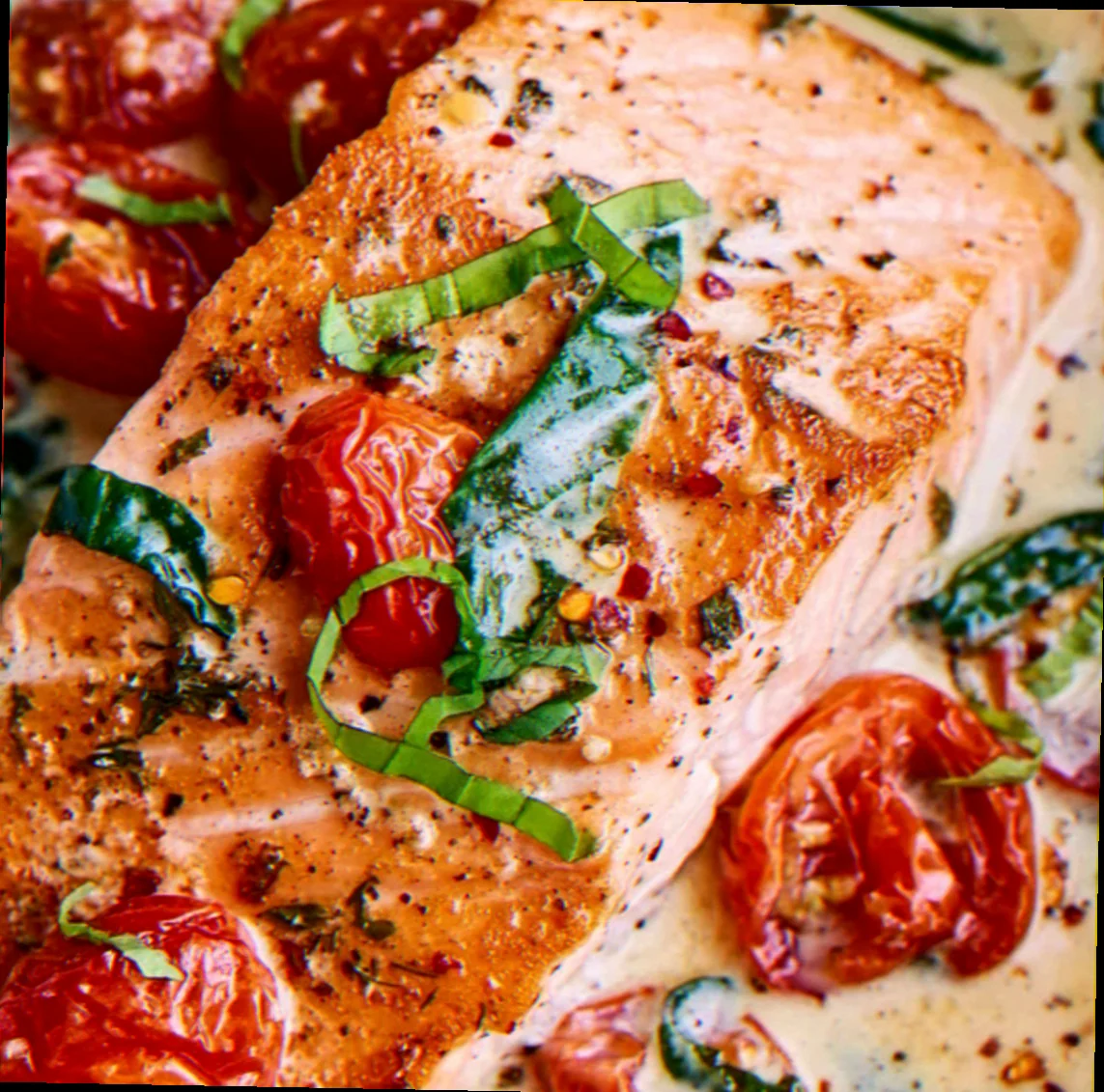
The allure of Tuscan salmon lies in its harmonious interplay of textures and flavours: the crisp, seared skin giving way to a moist, flaky salmon fillet, enveloped in a rich, herb-infused cream sauce studded with tangy sun-dried tomatoes and tender spinach. This culinary alchemy hinges on precise protein denaturation in the salmon, ensuring optimal juiciness, and the careful emulsification of the sauce's dairy fats, preventing separation and delivering that luxurious, velvety mouthfeel.
Complete Recipe Overview
| Property | Detail |
|---|---|
| Dish entity | Tuscan Salmon |
| Cuisine origin | Italian-American (Tuscan-inspired) |
| Defining technique | Pan-searing salmon with a creamy sauce emulsification |
| Hero ingredients | Salmon, Heavy Cream, Sun-dried Tomatoes |
| Critical ratio | Cream-to-broth ratio (approx. 2:1 for sauce richness) |
| Prep time | 15 minutes |
| Cook time | 20 minutes at 180°C (for oven finishing, if desired) |
| Rest / chill time | 5 minutes (for salmon) |
| Yield | 4 servings |
| Difficulty | Medium - requires attention to salmon cooking temperature and sauce stability. |
Ingredients: Quantities, Roles, and Critical Ratios
The structural logic of this ingredient list builds a complex flavour profile around the salmon, balancing rich fats with bright acidity and umami. The critical ratio here is the interplay between the heavy cream and the chicken broth in the sauce base, typically around 2 parts cream to 1 part broth. This proportion ensures a sauce that is both rich and robust, with enough body to cling to the salmon without becoming overly heavy or thin.
- Salmon Fillets - 4 (approx. 180-200 grams each, skin on) - Role: Primary protein, delivering rich omega-3 fats and a delicate, flaky texture.
- Heavy Cream (35-40% fat) - 240 ml - Role: Forms the luscious, velvety base of the sauce, providing richness and mouthfeel through its emulsified fat content.
- Sun-dried Tomatoes (oil-packed) - 80 grams (drained and chopped) - Role: Concentrated umami and sweet-tart flavour, adding chewiness and a vibrant colour.
- Fresh Spinach - 150 grams - Role: Adds freshness, a slight earthy bitterness, and vibrant green colour, wilting into the sauce.
- Parmesan Cheese (grated) - 50 grams - Role: Contributes savoury umami, saltiness, and helps to slightly thicken the sauce.
- Garlic - 4 cloves (minced) - Role: Aromatic foundation, providing pungent, savoury notes.
- Chicken or Vegetable Broth - 120 ml - Role: Thins the cream sauce to an ideal consistency while adding depth of flavour.
- Olive Oil - 30 ml - Role: Fat for searing salmon and sautéing aromatics, contributing fruity notes.
- Unsalted Butter - 15 grams - Role: Adds richness and aids in browning aromatics.
- Fresh Thyme or Italian Seasoning - 5 grams (chopped fresh or 2.5 grams dried) - Role: Aromatic herb, enhancing the "Tuscan" flavour profile.
- Salt - To taste (approx. 5 grams total) - Role: Enhances all other flavours.
- Black Pepper - To taste (approx. 2 grams total) - Role: Adds a piquant counterpoint.
The Science of Salmon Proteins and Cream Emulsions
Achieving perfectly cooked salmon and a stable, unctuous sauce are the cornerstones of this dish, each relying on distinct food science principles. When searing salmon, the primary goal is the controlled denaturation of its muscle proteins, primarily actin and myosin. At temperatures between 50-60°C, these proteins begin to unfold and coagulate, causing the flesh to firm up and turn opaque. Overcooking, above 63°C, leads to excessive protein contraction, squeezing out moisture and resulting in dry, tough fish. The high fat content of salmon (omega-3 fatty acids) also plays a crucial role; these fats render under heat, contributing to flavour and preventing dryness, particularly in the skin, which crisps through the Maillard reaction, a complex series of non-enzymatic browning reactions between amino acids and reducing sugars, producing hundreds of flavour compounds and a desirable crunchy texture.
For the sauce, the heavy cream is a critical component. Heavy cream is an oil-in-water emulsion, meaning tiny fat globules are dispersed and stabilised in a water phase by milk proteins (casein and whey) and phospholipids. When heated, these fat globules can destabilise and coalesce, leading to "breaking" or curdling. The key to a stable cream sauce is to heat it gently, avoiding rapid boiling, which can cause the proteins to aggregate too quickly, expelling the fat and water phases. Adding broth helps dilute the cream slightly, making it less prone to breaking. The grated Parmesan cheese, rich in casein proteins and calcium, also contributes to the sauce's stability and thickening ability. As the cheese melts, its proteins disperse and trap water, while the calcium ions can help form a stronger protein network, further binding the emulsion and giving the sauce its characteristic body.
Method: Pan-Searing and Sauce Emulsification at Every Critical Stage
This method is optimised for achieving perfectly seared, flaky salmon and a rich, stable cream sauce, ensuring each component reaches its peak texture and flavour simultaneously.
- Prepare - Salmon Fillets: Pat salmon fillets thoroughly dry with paper towels. Season generously with salt and black pepper on all sides. This dryness is crucial for achieving a crisp skin.
- Heat - Pan for Searing: Heat olive oil in a large, oven-safe skillet (cast iron or stainless steel recommended) over medium-high heat until it shimmers and just begins to smoke faintly.
- Sear - Salmon Skin-Side Down: Carefully place salmon fillets, skin-side down, into the hot skillet. Press gently with a spatula for the first 30 seconds to ensure even contact. Cook undisturbed for 4-5 minutes until the skin is deeply golden brown and crispy, and the flesh has cooked about one-third of the way up the sides.
- Critical Control Point 1 - Salmon Doneness: Overcooking salmon is the most common failure. Monitor the colour change: the opaque band should extend about 1/3 to halfway up the fillet. If the skin is browning too quickly, reduce heat slightly. If the salmon is very thick, you may finish it in the oven.
- Flip - Salmon Fillets: Flip the salmon fillets and cook for another 2-3 minutes on the flesh side, just until lightly browned. Transfer the seared salmon to a plate and set aside. It will finish cooking in the sauce or oven.
- Sauté - Aromatics: Reduce heat to medium. Add butter to the same skillet. Once melted, add minced garlic and sun-dried tomatoes. Sauté for 1-2 minutes until fragrant and the tomatoes have softened slightly.
- Deglaze - Pan: Pour in chicken broth, scraping the bottom of the pan with a wooden spoon to release any browned bits (fond). This adds immense flavour to the sauce. Bring to a gentle simmer for 1 minute.
- Simmer - Cream Sauce: Stir in the heavy cream and fresh thyme or Italian seasoning. Bring the sauce to a gentle simmer, stirring occasionally, and cook for 3-5 minutes until it thickens slightly. Avoid rapid boiling to prevent curdling.
- Critical Control Point 2 - Sauce Stability: The cream sauce can curdle if overheated or subjected to rapid temperature changes. Maintain a gentle simmer, never a rolling boil. If the sauce looks like it's starting to separate, immediately remove it from heat and stir vigorously; a small amount of cold broth or cream can sometimes rescue it.
- Wilt - Spinach: Add fresh spinach to the simmering sauce in batches if necessary. Stir until the spinach wilts completely, about 1-2 minutes.
- Finish - Sauce and Salmon: Stir in the grated Parmesan cheese until melted and fully incorporated. Taste and adjust seasoning with salt and pepper. Gently nestle the seared salmon fillets back into the sauce, spooning some sauce over them. Allow to heat through for 1-2 minutes, or if desired, place the oven-safe skillet into a preheated oven at 180°C for 5-7 minutes to finish cooking the salmon to an internal temperature of 57-60°C.
- Rest - Salmon: Once cooked, remove the salmon from the heat.
- Rest / set / cool - 5 minutes: This step is non-negotiable. Resting allows the muscle fibres in the salmon to relax and reabsorb juices, resulting in a significantly moister, more tender fillet. If skipped, the juices will run out immediately upon cutting, leading to a drier texture.
- Plate and serve: Carefully transfer the Tuscan salmon fillets to serving plates, ensuring each