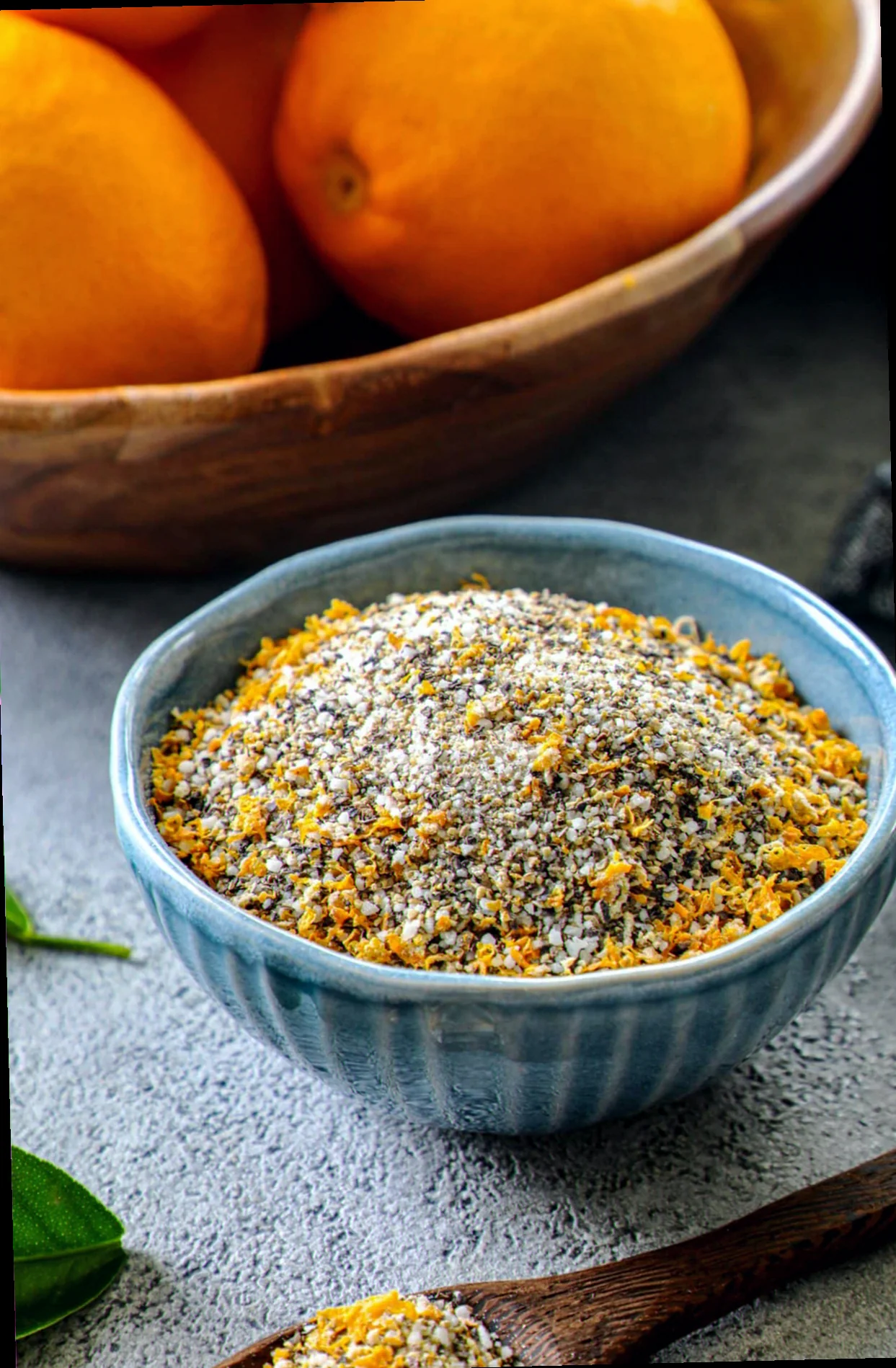
The sharp, bright zest of lemon and the pungent warmth of black pepper, when combined in a perfectly balanced seasoning, create a symphony of volatile organic compounds that awaken the palate. This seemingly simple blend, the Lemon Pepper Seasoning, is a masterclass in the power of aroma and flavour synergy, transforming humble ingredients into culinary stars. Its origins are rooted in the vibrant, adaptable cuisines of the American South, where it has evolved from a straightforward flavour enhancer to a beloved staple.
Complete Recipe Overview
| Property | Detail |
|---|---|
| Dish entity | Lemon Pepper Seasoning |
| Cuisine origin | American South / Creole-inspired |
| Defining technique | Dry blending and toasting |
| Hero ingredients | Black Peppercorns, Dried Lemon Zest, Salt |
| Critical ratio | Pepper:Lemon Zest:Salt (approx. 2:1:1 by volume, adjusted to taste) |
| Prep time | 10 minutes |
| Cook time | 5-7 minutes at 150°C (for toasting) |
| Rest / chill time | 30 minutes (to cool and meld flavours) |
| Yield | Approximately 100 grams |
| Difficulty | Easy - requires careful toasting to prevent burning. |
Ingredients: Quantities, Roles, and Critical Ratios
The magic of Lemon Pepper Seasoning lies in the interplay of its core components: the aromatic intensity of black pepper, the bright acidity of lemon, and the fundamental flavour enhancer, salt. The critical ratio, approximately 2 parts black pepper to 1 part dried lemon zest and 1 part salt by volume, ensures that no single flavour overpowers the others, creating a harmonious and complex profile. Adjustments to this ratio are common and allow for personalization, but this baseline offers a balanced starting point.
- Whole Black Peppercorns - 50 grams - Role: Provides pungent heat and complex aromatic notes through piperine and volatile oils.
- Dried Lemon Zest (finely grated) - 25 grams - Role: Imparts bright, citrusy acidity and fragrance via limonene and other essential oils.
- Kosher Salt (or fine sea salt) - 25 grams - Role: Enhances all other flavours and provides a foundational savoury base.
- Garlic Powder - 5 grams - Role: Adds a mellow, savoury depth without the raw bite of fresh garlic.
- Onion Powder - 5 grams - Role: Contributes a sweet, umami undertone that complements the other aromatics.
- Optional: Dried Parsley Flakes - 2 grams - Role: For visual appeal and a subtle herbaceous note.
The Science of Black Pepper Aroma
The characteristic pungency and aroma of black pepper are primarily due to the alkaloid piperine. When whole peppercorns are ground or heated, piperine is released, interacting with olfactory receptors in the nose and taste receptors on the tongue. This interaction triggers a sensation of heat and a complex aroma profile. Furthermore, black pepper contains numerous volatile organic compounds, such as monoterpenes (like pinene and limonene) and sesquiterpenes, which contribute to its nuanced, spicy, and slightly woody scent. The process of toasting the peppercorns before grinding intensifies these volatile compounds through mild dehydration and thermal degradation, releasing more potent aromatic molecules and a deeper, toastier flavour note.
Method: Dry Blending and Toasting at Every Critical Stage
This method focuses on gently coaxing out the maximum flavour and aroma from each ingredient through controlled heat and precise blending.
- Toast - Peppercorns: Spread 50 grams of whole black peppercorns in a single layer on a dry baking sheet. Place in a preheated oven at 150°C for 5-7 minutes. Watch closely as they become fragrant and slightly darkened; they should not burn.
- Cool - Peppercorns: Remove from the oven and allow the peppercorns to cool completely on the baking sheet. This step is crucial to prevent them from becoming bitter or smoking when ground.
- Grind - Peppercorns: Once cool, grind the toasted peppercorns using a spice grinder or a mortar and pestle to a coarse to medium-fine consistency. Aim for a texture that has some visual presence but will adhere well to food.
- Combine - Dry Ingredients: In a medium bowl, combine the ground toasted pepper, 25 grams of dried lemon zest, 25 grams of kosher salt, 5 grams of garlic powder, and 5 grams of onion powder. If using, add 2 grams of dried parsley flakes.
- Whisk - Homogeneity: Whisk all ingredients thoroughly until completely uniform. Ensure there are no pockets of salt or pepper.
- Rest - Melding Flavours: Cover the bowl or transfer the seasoning to an airtight container. Let it rest at room temperature for at least 30 minutes, or preferably several hours, to allow the flavours to meld and the dried lemon zest to rehydrate slightly from ambient moisture.
- Plate and serve: Store in an airtight container in a cool, dark place. Sprinkle generously over grilled meats, roasted vegetables, seafood, or popcorn.
Cultural and Historical Context of American South Flavours
Lemon pepper seasoning, while not originating from a single ancient tradition, gained significant traction and popularity in the American South, particularly in Creole and Cajun-influenced cuisines. Its adaptable nature made it a favourite for enhancing the flavour of seafood, poultry, and vegetables, common staples in the region. The blend reflects a culinary philosophy of bold, bright, and savoury profiles, often seen in dishes from New Orleans to the Carolinas, where the use of citrus and spice is paramount.
Variations Across American Regional Cuisines
- New Orleans Style: Often incorporates a slightly finer grind of pepper and may include a pinch of cayenne pepper for a subtle kick, reflecting the city's love for layered heat.
- Coastal Carolina Variation: Might lean more heavily on the lemon zest and salt, often used liberally on fresh catches like shrimp and flounder, highlighting the bright, briny flavours of the coast.
- Health-Conscious Adaptation: A version might reduce or omit salt and increase the ratio of lemon zest and pepper, creating a lower-sodium, more intensely aromatic seasoning.
- Modern "Lemon Pepper Wet" Sauce: While not a dry seasoning, the popular "lemon pepper wet" sauce, a staple in Southern hip-hop culture, transforms the dry seasoning into a rich, buttery sauce, typically by melting butter with the seasoning blend and sometimes adding hot sauce.
Storage, Freezing, and Reheating Lemon Pepper Seasoning
This dry seasoning is designed for shelf stability. Store the prepared Lemon Pepper Seasoning in an airtight container in a cool, dark, and dry place, such as a pantry. Properly stored, it will maintain its optimal flavour for 6-12 months. Freezing is generally not recommended for dry spice blends as it can introduce moisture and lead to clumping or flavour degradation. Reheating is not applicable as this is a seasoning, not a cooked dish.
Pairing Lemon Pepper Seasoning: Sides, Sauces, and Drinks
Lemon Pepper Seasoning is incredibly versatile. It pairs exceptionally well with grilled or roasted Shrimp (a natural affinity for citrus and spice) and Roasted Chicken (where the zest cuts through the richness of the skin). For a sauce, a simple Aioli spiked with extra lemon pepper seasoning provides a creamy, zesty counterpoint. To drink, a crisp Sauvignon Blanc, with its high acidity and citrus notes, or a light, effervescent Pilsner beer, whose carbonation and slight bitterness cleanse the palate, are excellent choices.
Answers to the Most-Searched Questions About Lemon Pepper Seasoning
What temperature should the peppercorns be toasted at - and how do I know they're done?
The peppercorns should be toasted at 150°C. They are done when they become fragrant, releasing their aromatic oils, and their colour deepens slightly to a darker brown. This typically takes 5-7 minutes. It is critical to avoid burning them, which will result in a bitter flavour.
What is the difference between Lemon Pepper Seasoning and a pre-made commercial blend?
The primary difference lies in freshness and control. Homemade Lemon Pepper Seasoning uses whole spices that are toasted and ground just before mixing, maximizing volatile oil content and thus flavour intensity. Commercial blends can sometimes use pre-ground spices that have lost potency over time, and may contain anti-caking agents or fillers. Making it yourself also allows for precise control over the ratio of pepper, lemon, and salt.
Can Lemon Pepper Seasoning be made in advance, and does it freeze well?
Yes, Lemon Pepper Seasoning can and should be made in advance to allow flavours to meld. It does not freeze well; freezing can introduce moisture and cause the seasoning to clump, diminishing its quality and shelf life. Store in an airtight container in a cool, dry place for optimal results.