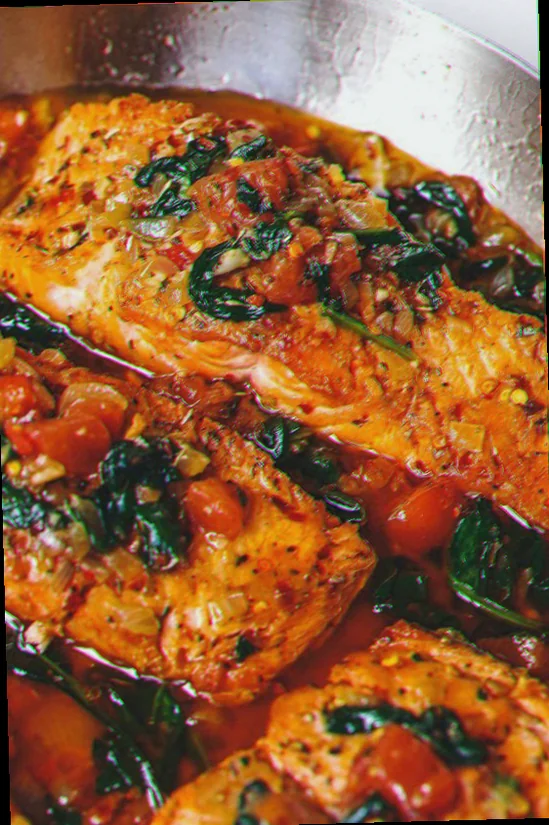
Italian salmon, or salmone al forno, exemplifies the Mediterranean diet's emphasis on healthy fats and fresh ingredients. The dish achieves its signature flaky texture and delicate flavour through a precise balance of heat and moisture during baking, resulting in a beautifully browned exterior and a succulent interior. This recipe originates from the coastal regions of Italy, particularly Sicily, where seafood is a cornerstone of the cuisine.
Complete Recipe Overview
| Property | Detail |
|---|---|
| Dish entity | Italian Baked Salmon (Salmone al Forno) |
| Cuisine origin | Italian (Sicilian) |
| Defining technique | Baking |
| Hero ingredients | Salmon fillet, Lemon, Cherry Tomatoes |
| Critical ratio | Fat (salmon) : Acid (lemon juice) - approximately 20:1 by weight |
| Prep time | 15 minutes |
| Cook time | 20-25 minutes at 180°C |
| Rest / chill time | 5 minutes |
| Yield | 4 servings |
| Difficulty | Easy - this recipe relies on simple techniques and readily available ingredients, making it suitable for beginner cooks. |
Ingredients: Quantities, Roles, and Critical Ratios
This Italian baked salmon recipe centers around the natural richness of the salmon fillet, brightened by the acidity of lemon and the sweetness of cherry tomatoes. The critical ratio of fat from the salmon to acid from the lemon juice is essential; the acid helps to denature the salmon proteins, resulting in a more tender and flaky texture, while preventing a ‘fishy' taste. The cherry tomatoes contribute moisture and a burst of umami flavour, complementing the salmon beautifully.
- Salmon fillet - 600g (skin on or off, your preference) - Role: Provides the primary protein and healthy fats, forming the structural base of the dish.
- Cherry tomatoes - 250g - Role: Adds sweetness, acidity, and moisture, creating a vibrant sauce during baking.
- Lemon - 1 large - Role: Provides acidity to balance the richness of the salmon and enhance its flavour. Zest adds aromatic complexity.
- Garlic - 2 cloves - Role: Infuses the dish with savoury depth.
- Fresh Rosemary - 2 sprigs - Role: Contributes a fragrant, piney aroma and flavour.
- Extra Virgin Olive Oil - 30ml - Role: Facilitates heat transfer and adds richness.
- Salt - 5g - Role: Enhances flavour and draws out moisture.
- Black Pepper - 2g - Role: Adds a subtle spice and complexity.
- Dry White Wine - 60ml - Role: Deglazes the pan and adds a subtle acidity and complexity to the sauce.
The Science of Salmon and Maillard Reaction
Salmon's distinctive pink colour comes from its high concentration of astaxanthin, a carotenoid antioxidant. More importantly for this recipe, salmon is rich in omega-3 fatty acids, which contribute to its delicate texture and flavour. During baking, the Maillard reaction occurs between amino acids and reducing sugars on the surface of the salmon, creating hundreds of flavour compounds and the desirable browned colour. The heat denatures the salmon's proteins, causing them to unfold and re-aggregate, resulting in a flaky texture. The lemon juice further aids in protein denaturation, making the salmon more tender. Controlling the baking temperature is crucial; too low, and the Maillard reaction won't occur sufficiently, resulting in pale and bland salmon. Too high, and the salmon will dry out before the reaction is complete.
Method: Baking at Every Critical Stage
This method is optimized for even cooking and maximum flavour development, ensuring a moist and flaky salmon with a beautifully browned exterior.
- Preheat - Oven: Preheat oven to 180°C. This ensures consistent heat distribution for even cooking.
- Prepare - Salmon: Pat salmon fillet dry with paper towels. Season generously with salt and pepper.
- Sauté - Aromatics: Heat olive oil in an oven-safe skillet over medium heat. Add minced garlic and rosemary sprigs; sauté for 1 minute until fragrant. Critical control point 1: Do not brown the garlic, as it will become bitter. Reduce heat if necessary.
- Sear - Salmon: Place salmon fillet skin-side down (if skin-on) in the skillet. Sear for 2-3 minutes until the skin is lightly browned and crispy.
- Deglaze - Pan: Pour in white wine and scrape up any browned bits from the bottom of the skillet. This adds depth of flavour to the sauce.
- Add - Tomatoes & Lemon: Add cherry tomatoes and lemon slices to the skillet around the salmon. Squeeze lemon juice over the salmon.
- Bake - Salmon: Transfer skillet to the preheated oven and bake for 15-20 minutes, or until salmon is cooked through. Critical control point 2: Overbaking is the most common mistake. Salmon is done when it flakes easily with a fork and reaches an internal temperature of 52-55°C.
- Rest - Salmon: Remove from oven and let rest for 5 minutes before serving. This allows the juices to redistribute, resulting in a more moist and flavourful fillet.
- Plate and serve: Garnish with fresh rosemary sprigs and a drizzle of olive oil. The vibrant red of the tomatoes and the golden-brown salmon create a visually appealing dish.
Cultural and Historical Context of Sicilian Cuisine
Sicilian cuisine, born from a crossroads of cultures - Greek, Roman, Arab, Norman, and Spanish - is characterized by its bold flavours and fresh, seasonal ingredients. The island's strategic location in the Mediterranean Sea has historically made seafood a central component of its diet. Salmone al Forno, while a relatively modern adaptation, reflects this tradition, utilizing simple techniques to showcase the quality of the ingredients. The use of lemon and herbs is a hallmark of Sicilian cooking, influenced by the region's abundant citrus groves and aromatic flora.
Variations Across Italian Regions
- Puglia: In Puglia, this dish might include black olives and a sprinkle of oregano, adding a briny and herbaceous flavour profile.
- Campania: Campanian versions often incorporate capers and a touch of chili flakes, providing a salty and spicy kick.
- Vegan adaptation: Substitute the salmon with thick slices of portobello mushroom marinated in lemon juice, olive oil, and herbs.
- Modern adaptation: Adding a pesto drizzle after baking provides a vibrant herbaceous counterpoint to the richness of the salmon.
Storage, Freezing, and Reheating Italian Baked Salmon
Leftover Italian baked salmon can be stored in an airtight container in the refrigerator for up to 2 days. Reheating is best done in a low oven (150°C) for 10-15 minutes to prevent drying out. Freezing is not recommended, as the texture of the salmon will be significantly altered upon thawing. The tomatoes will become mushy, and the salmon will lose its flaky texture. Room temperature storage is not recommended due to food safety concerns.
Pairing Italian Baked Salmon: Sides, Sauces, and Drinks
Roasted asparagus or sautéed spinach are excellent side dishes, providing a fresh, green counterpoint to the richness of the salmon. A simple lemon-butter sauce can enhance the flavour further. A crisp, dry Italian white wine, such as Pinot Grigio or Vermentino, pairs beautifully with this dish. The wine's acidity cuts through the richness of the salmon, while its subtle fruit flavours complement the tomatoes and herbs. Alternatively, a light-bodied Italian beer, like a Peroni, would also be a refreshing accompaniment.
Answers to the Most-Searched Questions About Italian salmon recipe
What temperature should Italian baked salmon be cooked at - and how do I know it's done?
Italian baked salmon should be cooked at 180°C. It's done when it flakes easily with a fork and reaches an internal temperature of 52-55°C. The surface should be lightly browned.
What is the difference between Italian salmon recipe and salmon en papillote?
Italian salmon is baked in a skillet, allowing for some browning and caramelization, while salmon en papillote is steamed in parchment paper, resulting in a more delicate and moist texture. En papillote relies on the steam created during cooking, while Italian salmon benefits from direct heat.
Can Italian salmon recipe be made in advance, and does it freeze well?
While the sauce can be prepared in advance, the salmon is best cooked and served immediately. Freezing is not recommended, as it significantly impacts the texture of the salmon and tomatoes.