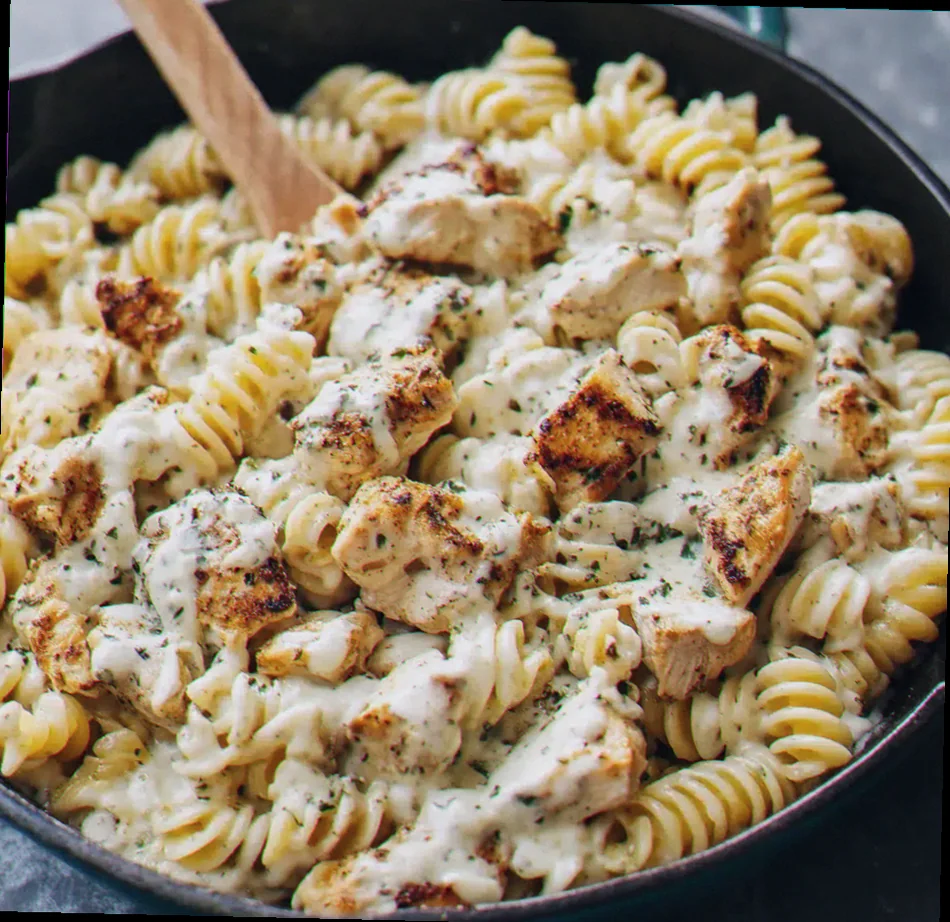
Imagine tender, golden-brown chicken strips nestled among strands of perfectly cooked fettuccine, all coated in a luxuriously creamy, rich, and savory sauce that clings to every bite. This is the promise of Easy Chicken Alfredo, a beloved Italian-American comfort dish that, when done right, delivers pure satisfaction. The secret to transforming a humble jar of sauce into a restaurant-worthy meal lies in three crucial elements: expertly cooked chicken, perfectly al dente pasta, and a few simple enhancements to the jarred Alfredo that elevate its flavor and texture profile.
Quick Reference
| Field | Detail |
|---|---|
| Dish | Easy Chicken Alfredo with Jar Sauce |
| Origin | Italian-American cuisine |
| Hero ingredients | Chicken breast, Fettuccine pasta, Jarred Alfredo sauce |
| Defining technique | Sautéing, Simmering |
| Texture | Creamy, Tender |
| Flavour | Rich, Savory, Garlicky |
| Total time | 30 minutes |
| Servings | 4 |
| Pairs with | Pinot Grigio |
| Occasion | Weeknight dinner, Family meal |
Ingredients - What Actually Matters and Why
Each component of this dish plays a vital role in achieving its signature flavor and texture. Starting with quality hero ingredients ensures a delicious outcome, even when relying on convenience items like jarred sauce. The chicken provides a lean protein and savory depth, the fettuccine offers the perfect wide surface for the creamy sauce to cling, and the jarred Alfredo sauce forms the essential, flavorful base that we'll enhance.
- Chicken breast - 2 large (about 600g), boneless, skinless, cut into ½-inch strips - its role: provides lean protein and a savory counterpoint to the rich sauce.
- Fettuccine pasta - 340g (12 oz) - its role: broad, flat strands are ideal for capturing and delivering the creamy sauce.
- Jarred Alfredo sauce - 680g (24 oz) jar - its role: the convenient, flavorful base for our creamy sauce, ready for elevation.
- Olive oil - 2 tablespoons
- Garlic - 3 cloves, minced
- Chicken broth - ½ cup (120ml) - adds depth and helps thin the sauce to the perfect consistency.
- Parmesan cheese - ½ cup (50g), freshly grated, plus more for serving - enhances the cheesy flavor and helps thicken the sauce.
- Fresh parsley - 2 tablespoons, chopped, for garnish - adds a fresh, herbaceous note and visual appeal.
- Salt and freshly ground black pepper - to taste
Method: Sautéing and Simmering Step by Step
This method prioritizes cooking each component to perfection before bringing them together, ensuring the chicken is tender, the pasta is al dente, and the sauce is perfectly rich and creamy. The sequence allows for efficient cooking and optimal flavor development.
- Prepare - Chicken: Season chicken strips generously with salt and pepper.
- Sauté - Chicken: Heat olive oil in a large skillet or Dutch oven over medium-high heat until shimmering. Add chicken strips in a single layer, ensuring not to overcrowd the pan. Sauté for 3-4 minutes per side until golden brown and cooked through, with no pink remaining inside. Remove chicken from the skillet and set aside on a plate, reserving any drippings.
- Boil - Pasta: While chicken cooks, bring a large pot of salted water to a rolling boil. Add fettuccine pasta and boil according to package directions until al dente - tender to the bite but still firm. Before draining, reserve 1 cup (240ml) of the starchy pasta water. Drain the pasta well.
- Sauté - Aromatics: Reduce heat to medium. Add minced garlic to the same skillet with any remaining oil or chicken drippings. Sauté for 30-60 seconds until fragrant, being careful not to burn it (it should smell sweet, not acrid).
- Simmer - Sauce: Pour in the jarred Alfredo sauce and chicken broth. Bring the mixture to a gentle simmer, stirring constantly with a whisk to combine. The sauce should be bubbling lightly around the edges.
- Enrich - Sauce: Stir in the grated Parmesan cheese until fully melted and the sauce looks smooth and slightly thickened. If the sauce appears too thick, gradually add a tablespoon or two of the reserved pasta water until it reaches your desired creamy consistency - it should glisten and coat the back of a spoon.
- Combine - Dish: Return the cooked chicken to the skillet with the sauce. Add the drained fettuccine to the skillet. Using tongs, gently toss the pasta and chicken with the sauce until everything is evenly coated and glistening.
- Finish and plate: Taste and adjust seasoning with salt and pepper as needed. Divide the creamy Chicken Alfredo among serving plates. Garnish generously with fresh chopped parsley and an extra sprinkle of grated Parmesan cheese. The visual attribute of a perfectly made dish is golden-brown chicken strips contrasting with bright green parsley, all nestled in a uniformly coated, silky white pasta.
Authentic vs Adapted: What Changes and What Doesn't
The concept of "Alfredo" has a fascinating journey from its origins to the familiar dish we know today. True Roman Alfredo, or "Fettuccine all'Alfredo," is a remarkably simple dish, created in Rome by Alfredo di Lelio. It consists solely of fresh fettuccine, high-quality butter, and Parmigiano-Reggiano cheese, artfully tossed to create a rich emulsion. There is no cream, no garlic, and certainly no chicken in the traditional version. This classic relies on the technique of emulsifying the melting butter and cheese with starchy pasta water to create a creamy, luxurious sauce.
Our Easy Chicken Alfredo recipe, using jarred sauce, is a delicious and practical adaptation tailored for the modern home cook and the Italian-American palate. While it deviates significantly from the Roman original in ingredients (adding cream, garlic, chicken, and often other seasonings), it aims to replicate the non-negotiable attributes of a satisfying Alfredo: a rich, velvety mouthfeel, a savory cheesy flavor, and tender pasta that's thoroughly coated. The use of jarred sauce is a further adaptation for convenience, but by adding fresh garlic, chicken broth, and extra Parmesan, we elevate its depth and ensure the final dish retains that comforting, flavorful essence that makes Chicken Alfredo so beloved. The key is to achieve that creamy, clinging sauce and tender chicken, which are paramount to the dish's identity, regardless of its origin story.
Substitutions That Work (and Ones That Don't)
- Chicken breast → Chicken thighs: Texture/flavour impact: Chicken thighs will yield a richer, more succulent flavor and a slightly more tender texture due to their higher fat content. Recommendation: Highly recommended for a more robust dish. Adjust cooking time slightly as thighs may take longer to cook through.
- Fettuccine pasta → Linguine or Penne: Texture/flavour impact: Linguine will work similarly to fettuccine, offering good sauce adhesion. Penne will create a chunkier dish, with sauce filling the tubes. Recommendation: Both are good alternatives. Avoid very thin pastas like angel hair, as they can get lost in the creamy sauce.
- Parmesan cheese → Grana Padano or Pecorino Romano: Texture/flavour impact: Grana Padano offers a similar nutty, salty profile to Parmesan. Pecorino Romano is sharper and saltier, adding a bolder kick. Recommendation: Grana Padano is an excellent swap. Pecorino Romano works if you prefer a more assertive cheese flavor.
- For dietary needs - Dairy-free: Exact swaps with method adjustments: Use a plant-based jarred Alfredo sauce (often almond or oat milk based), dairy-free chicken strips (or plant-based chicken substitute), and a good quality dairy-free grated Parmesan alternative. The method remains largely the same.
- Budget swap: Chicken breast → Ground chicken or turkey: Cheaper alternative to an expensive ingredient entity + honest impact assessment: Ground chicken or turkey can be much more economical. It will change the texture from strips to a more crumbled consistency but still provides savory protein. Cook until browned and crumbled before adding sauce.
What to Serve Alongside Easy Chicken Alfredo
To complement the richness of Easy Chicken Alfredo, pairing it with fresh, lighter side dishes creates a balanced meal. A crisp, vibrant green salad, perhaps with a tangy vinaigrette, offers a refreshing contrast to the creamy pasta. Garlic bread is a classic companion, perfect for soaking up any leftover sauce, adding a satisfying crunch and aromatic punch. For a complete Italian-American meal, a simple side of steamed broccoli or asparagus adds a touch of green and lightens the plate.
For a drink pairing, a dry, crisp white wine is an excellent choice. A Pinot Grigio from Italy, with its bright acidity and notes of green apple and citrus, cuts through the richness of the Alfredo beautifully, cleansing the palate with each sip. If you prefer red wine, a light-bodied Sangiovese or a young Chianti would also work, offering acidity without overpowering the delicate flavors of the sauce.
Troubleshooting: Why Your Easy Chicken Alfredo Went Wrong
Even with simple recipes, small missteps can lead to less-than-perfect results. Here's how to diagnose and fix common issues:
- Symptom: Watery or thin sauce. Cause: This often happens if too much chicken broth or pasta water was added, or if the sauce wasn't simmered long enough to thicken. Fix: Return the sauce to a low simmer and continue stirring gently. For a quick fix, whisk in a tablespoon of cornstarch mixed with a tablespoon of cold water, then simmer for another minute until thickened. Next time, add liquids gradually and allow the sauce to reduce.
- Symptom: Clumpy or grainy sauce. Cause: This can occur if the cheese is added to a sauce that's too hot, causing it to seize, or if the cheese isn't fully melted and whisked in. Fix: Remove the skillet from direct heat. Gradually whisk in a tablespoon of warm milk or pasta water until the sauce becomes smooth. Next time, ensure the sauce is at a gentle simmer (not a rolling boil) when adding cheese, and whisk continuously until fully incorporated and silky.
- Symptom: Dry or rubbery chicken. Cause: Overcooking the chicken breast is the primary culprit. Fix: Unfortunately, once chicken breast is overcooked, it's hard to fully rescue its texture. For immediate serving, ensure the sauce is extra moist to compensate. Next time, watch the chicken carefully while sautéing; remove it from the pan as soon as it's golden-brown and cooked through (internal temperature of 74°C / 165°F), even if you think it's not quite done, as