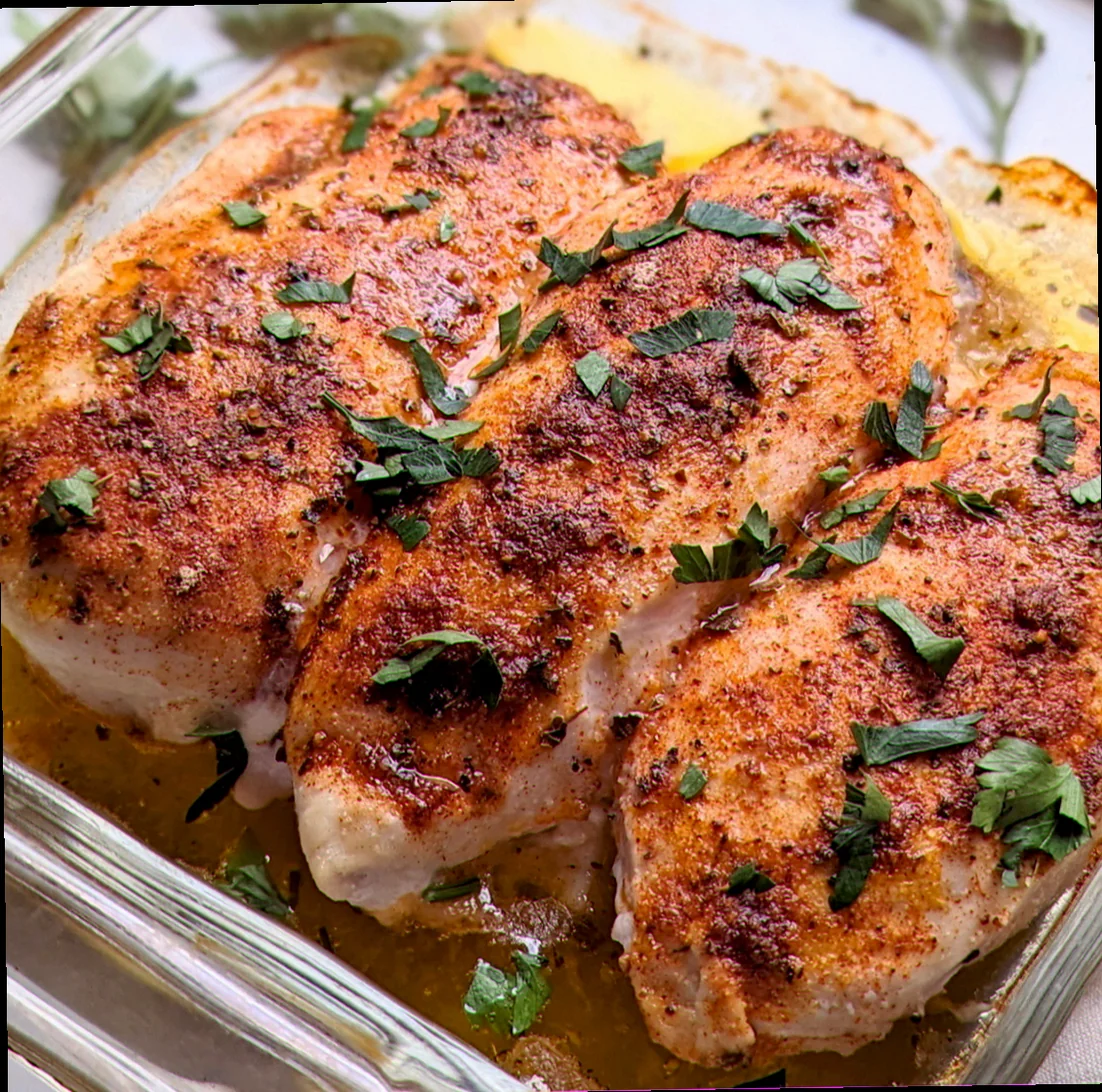
At the molecular level, the success of Low sodium chicken recipes hinges on the manipulation of myofibrillar proteins and the optimization of the Maillard reaction in the absence of sodium chloride. In a traditional preparation, salt acts as a humectant and a protein denaturant, but in high-quality Mediterranean-inspired low sodium poultry, we rely on the chemical synergy of organic acids and volatile aromatics to stimulate the trigeminal nerve and compensate for the reduced ionic stimulation on the taste buds. By focusing on the "umami-acid-heat" triad, we can achieve a depth of flavor that mimics the presence of salt through enzymatic complexity and Maillard-driven browning.
Complete Recipe Overview
| Property | Detail |
|---|---|
| Dish entity | Low Sodium Lemon-Herb Pan-Seared Chicken |
| Cuisine origin | Mediterranean / Modern Dietetic (DASH-aligned) |
| Defining technique | Lipid-Aromatic Infusion and Deglazing |
| Hero ingredients | Chicken Breast, Fresh Lemon, Extra Virgin Olive Oil |
| Critical ratio | 1:15 (Acidic marinade to Protein mass) |
| Prep time | 20 minutes (plus 30 minutes marinating) |
| Cook time | 12-15 minutes at 175°C (pan surface) |
| Rest / chill time | 5 minutes |
| Yield | 4 servings (approx. 600g cooked weight) |
| Difficulty | Medium - Requires precise temperature control to prevent moisture loss without salt. |
Ingredients: Quantities, Roles, and Critical Ratios
The structural logic of this recipe relies on the 1:15 ratio of acid to protein. Without salt to dissolve myosin and create a "tacky" surface for browning, the acid in the lemon juice serves to partially denature the surface proteins, while the lipids in the olive oil act as a heat-transfer medium and a carrier for fat-soluble aromatic compounds from the garlic and herbs.
- Chicken Breast (Boneless/Skinless) - 600g - Role: Primary protein structure and source of endogenous glutamates.
- Fresh Lemon Juice - 40ml - Role: Acidic denaturant that brightens flavor and breaks down surface connective tissue.
- Extra Virgin Olive Oil - 30ml - Role: Solvent for fat-soluble aromatics (allicin and terpenes) and heat conductor.
- Fresh Garlic (Crushed) - 15g - Role: Provides sulfur compounds that mimic the "savory" hit of sodium.
- Dried Oregano and Thyme - 5g each - Role: Adds phenolic complexity and "earthy" notes to the flavor profile.
- Smoked Paprika - 3g - Role: Provides "wood-smoke" volatiles that enhance the perception of richness.
- Black Pepper (Freshly Cracked) - 2g - Role: Piperine content provides a heat-based sensory distraction from the lack of salt.
- Unsalted Chicken Stock (for deglazing) - 60ml - Role: Solvent for capturing the "fond" (browned bits) and creating a pan sauce.
The Science of Myofibrillar Protein Denaturation
In standard cooking, sodium chloride (salt) is used to increase the water-holding capacity of chicken by shifting the isoelectric point of the proteins. When crafting Low sodium chicken recipes, we must account for the fact that the meat will naturally shed more moisture during the cooking process. To counteract this, we employ the science of "Acidic Pre-denaturation." When the lemon juice (citric acid) interacts with the chicken breast, it lowers the pH of the meat surface. This causes the tightly wound protein strands to begin to uncoil. If left too long (over 2 hours), the meat becomes mushy; however, for 30 minutes, it creates a tenderized surface that better absorbs the garlic's allicin and the herb's terpenes.
Furthermore, the Maillard reaction-the chemical reaction between amino acids and reducing sugars that gives browned food its distinctive flavor-is actually inhibited by high concentrations of salt. By reducing sodium, we can potentially achieve a more complex Maillard profile at slightly lower temperatures. We leverage the 175°C pan temperature to catalyze this reaction, ensuring that the melanoidins (the brown pigments) provide the "savory" depth that the palate usually associates with saltiness. The smoked paprika further assists this by introducing guaiacol and syringol, compounds that provide a "charred" sensory illusion.
Method: Lipid-Aromatic Infusion at Every Critical Stage
The sequence is optimized to maximize the "fond" development on the pan surface while maintaining internal moisture without the aid of brine.
- Infuse - The Cold Marinade: Combine 30ml olive oil, 40ml lemon juice, garlic, and herbs in a glass bowl. Submerge the 600g of chicken. Ensure the internal temperature of the meat remains at 4°C during this 30-minute window to prevent bacterial proliferation.
- Sear - The Thermal Shock: Heat a stainless steel or cast-iron skillet to exactly 175°C. You will know it is ready when a drop of water "dances" on the surface (the Leidenfrost effect). Place the chicken in the pan.
- Sear - Critical control point 1: Do not move the chicken for at least 4 minutes. This is the moment where the Maillard reaction occurs. If you move it too early, the protein-metal bond will tear the meat fibers, releasing precious intracellular moisture and leading to a dry result. Look for a deep golden-brown edge.
- Flip - The Secondary Cook: Turn the chicken breasts. Lower the heat slightly to 150°C. Cook for another 5-7 minutes until the internal temperature reaches exactly 74°C.
- Deglaze - Critical control point 2: Remove the chicken from the pan. Immediately pour 60ml of unsalted stock into the hot skillet. Use a wooden spatula to scrape the brown bits (the fond). This is the "Flavor Extraction" phase. If the pan is too hot and the liquid evaporates instantly into a dark cloud, remove from heat immediately to prevent the sauce from turning bitter.
- Emulsify - The Pan Sauce: Whisk in a final squeeze of lemon juice and a teaspoon of olive oil to the deglazed liquid until it thickens slightly into a glossy sauce.
- Rest / set / cool - 5 minutes: This step is non-negotiable. During resting, the temperature of the chicken will stabilize and the muscle fibers, which contracted during cooking, will relax. This allows the internal juices (containing the concentrated savory flavors) to redistribute. If skipped, the juice will run out upon cutting, leaving the meat straw-like and bland.
- Plate and serve: Slice the chicken against the grain to further tenderize the mouthfeel and drizzle the pan sauce over the top, highlighting the golden-brown Maillard crust.
Cultural and Historical Context of Low Sodium Dietary Evolution
The movement toward Low sodium chicken recipes is largely rooted in the late 20th-century medical shift in the United States and Europe, specifically following the landmark DASH (Dietary Approaches to Stop Hypertension) study published in 1997. Historically, however, salt was a precious and expensive commodity. In the regional cuisines of inland West Africa and parts of Southeast Asia, "salt-free" flavor profiles were the norm for centuries, relying instead on fermented pastes (which, though sometimes salty, were used sparingly) and heavy aromatic infusions of lemongrass, galangal, and various peppers. The Mediterranean Basin, particularly the rural regions of Crete and Southern Italy, also provides a historical template for this dish. In these cultures, the emphasis was on "freshness as flavor," where the acidity of local citrus and the pungency of wild-grown herbs like oregano were utilized to elevate the natural sweetness of the poultry, rather than masking it with heavy mineral salting.
Variations Across Global Cuisine Entities
- Provence Variation (France): Replace the smoked paprika with 10g of Herbes de Provence (lavender, rosemary, savory). This version focuses on floral aromatics and uses a dry white wine for deglazing instead of stock, providing a sharper, more sophisticated acidity.
- Tuscan Variation (Italy): Increase the garlic to 25g and add 15g of chopped fresh sage. The cooking lipid is strictly high-phenolic olive oil, and the dish is finished with a heavy dusting of cracked black pepper to provide "fake heat" that mimics the bite of salt.
- Plant-Based Adaptation (Tofu/Seitan): Use 500g of extra-firm tofu pressed for 1 hour. Because tofu lacks the endogenous glutamates of chicken, add 5ml of low-sodium liquid aminos to the marinade to provide the necessary umami backbone without exceeding sodium limits.
- Modern Air-Fryer Adaptation: Set the air fryer to 190°C. This method uses high-velocity convection to accelerate the Maillard reaction. While it produces a superior "crunch," it risks drying the meat faster, so the chicken must be sprayed with a thin layer of oil every 5 minutes.
Storage, Freezing, and Reheating Low Sodium Chicken
Proper storage is vital because, without salt acting as a preservative, the meat is slightly more susceptible to oxidation (the "warmed-over flavor" caused by lipid oxidation). Store in an airtight glass container to prevent odor absorption.
- Refrigerator Storage: Keep at 1-4°C for up to 4 days. The lemon juice in the sauce will continue to act on the protein, so the texture may become slightly firmer over time.
- Freezer Storage: Place in a vacuum-sealed bag to prevent freezer burn. Store at -18°C for up to 3 months. Note that the cellular structure of the chicken may weaken slightly upon thawing, resulting in a minor loss of juiciness.
- Reheating: To maintain texture, do not use a microwave. Instead, place the chicken in a pan with 30ml of water or unsalted stock, cover with a lid, and heat at 120°