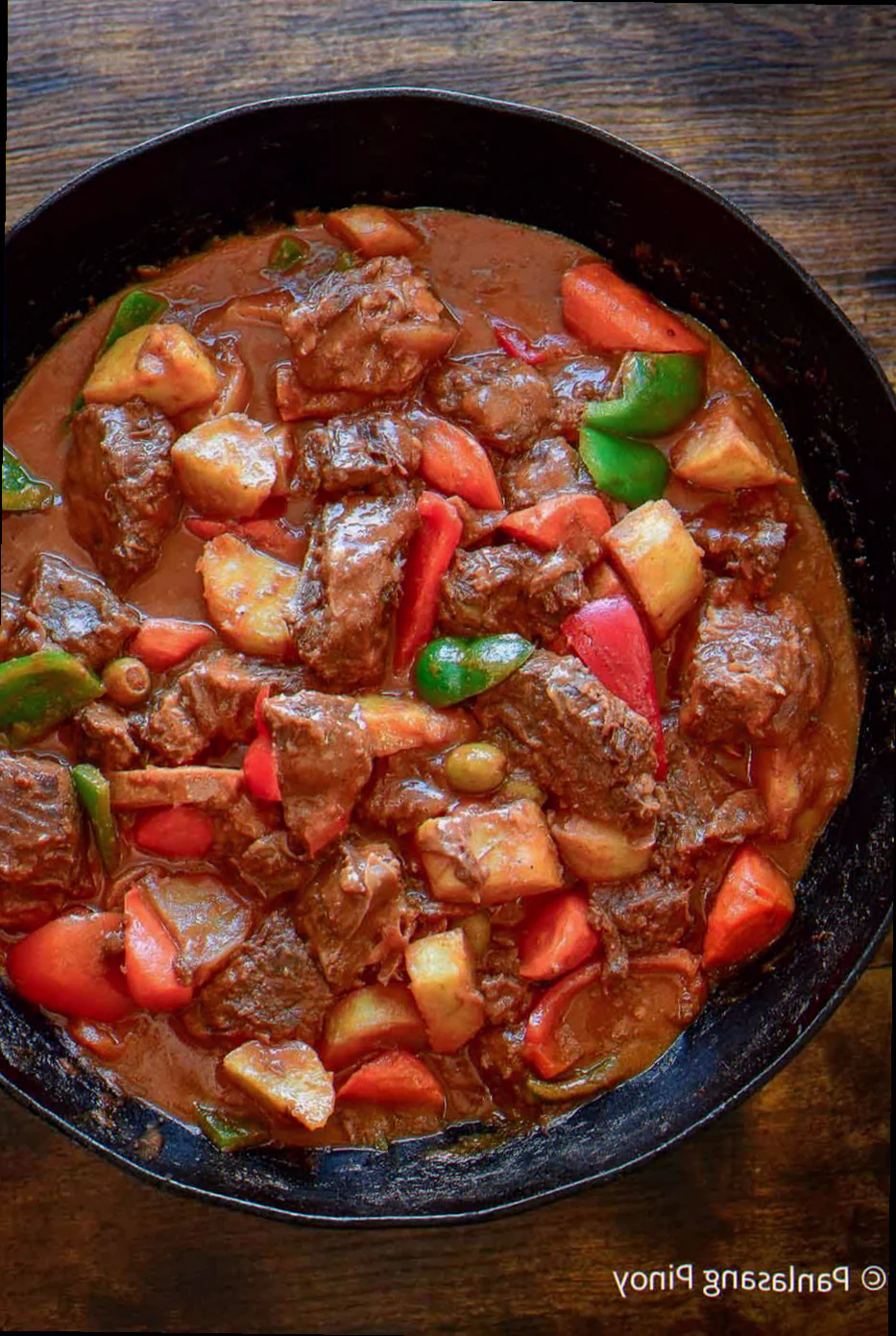
The aroma of slowly braised beef, infused with the smoky sweetness of tomato paste, the subtle heat of chili peppers, and the creamy richness of potatoes - that's the promise of a perfect Beef Caldereta. Originating from the Philippines, specifically the Tagalog region, this hearty stew is a celebration of flavour and texture. Achieving that fall-off-the-bone tenderness, a vibrant, slightly thickened sauce, and a balance of savoury, spicy, and sweet notes are the keys to unlocking a truly exceptional Caldereta.
Quick Reference
| Field | Detail |
|---|---|
| Dish | Beef Caldereta |
| Origin | Filipino (Tagalog region) |
| Hero ingredients | Beef, Tomato Paste, Potatoes |
| Defining technique | Braising |
| Texture | Tender, Saucy |
| Flavour | Savoury, Spicy, Sweet |
| Total time | 180 minutes |
| Servings | 6-8 |
| Pairs with | San Miguel Pale Pilsen |
| Occasion | Family gatherings, Special occasions |
Ingredients - What Actually Matters and Why
Beef is the foundation of this dish, providing the rich, savoury base. Tomato paste isn't just a colourant; its concentrated flavour and slow caramelization during braising create the signature depth. And finally, potatoes aren't merely a filler - they absorb the sauce, contributing to the stew's creamy texture and providing a comforting starchiness.
- Beef chuck - 1.5 kg, cut into 1-inch cubes - Provides the necessary collagen for a tender, flavourful braise.
- Tomato paste - 150g - Forms the base of the sauce, developing a deep, umami-rich flavour during prolonged cooking.
- Potatoes - 500g, peeled and quartered - Absorbs the sauce, adding body and a comforting starchiness.
- Onion - 1 large, chopped
- Garlic - 6 cloves, minced
- Ginger - 2 tbsp, grated
- Red bell pepper - 1 large, chopped
- Green bell pepper - 1 large, chopped
- Canned diced tomatoes - 400g
- Coconut milk - 400ml (full-fat) - Adds richness and a subtle sweetness.
- Soy sauce - 2 tbsp
- Fish sauce - 1 tbsp (optional, for extra umami)
- Sugar - 1 tsp
- Chili peppers - 2-3 (Siling Labuyo or Serrano), chopped (adjust to taste)
- Beef broth - 500ml
- Vegetable oil - 2 tbsp
- Black peppercorns - 1 tsp, crushed
- Bay leaves - 2
- Spring onions - for garnish
Method: Braising Step by Step
This recipe relies on a sequential braising process, building layers of flavour and ensuring the beef achieves maximum tenderness. We start by searing the beef for colour and flavour, then build the sauce base, and finally, gently braise everything together until melt-in-your-mouth perfection is reached.
- Sear - Beef: Heat oil in a large, heavy-bottomed pot or Dutch oven over medium-high heat (180°C). Sear the beef in batches until browned on all sides - listen for a strong sizzle and watch for a deep mahogany colour. Remove and set aside.
- Sauté - Aromatics: Add onion to the pot and sauté until translucent (5-7 minutes). Add garlic and ginger and cook for another minute until fragrant.
- Bloom - Tomato Paste: Stir in the tomato paste and cook for 3-5 minutes, stirring constantly, until it darkens slightly and releases a rich aroma.
- Build - Sauce Base: Add diced tomatoes, bell peppers, chili peppers, soy sauce, fish sauce (if using), sugar, peppercorns, and bay leaves. Cook for 5 minutes, stirring occasionally, until the peppers soften.
- Braise - Beef and Sauce: Return the beef to the pot. Pour in the beef broth and coconut milk, ensuring the beef is mostly submerged. Bring to a boil, then reduce heat to low, cover, and braise for 2-2.5 hours, or until the beef is incredibly tender - the beef should yield easily when pierced with a fork.
- Simmer - Potatoes: Add the potatoes during the last 30-40 minutes of braising. Continue to simmer until the potatoes are tender and the sauce has thickened slightly.
- Finish and plate: Remove bay leaves. Taste and adjust seasoning as needed. Garnish with chopped spring onions. Serve hot, with the tender beef, creamy potatoes, and vibrant sauce glistening invitingly.
Authentic vs Adapted: What Changes and What Doesn't
Traditionally, Beef Caldereta in the Philippines is a celebratory dish, often served during fiestas or family gatherings. The original versions typically used goat meat (caldereta de cabra) and featured a more pronounced spiciness. Liver spread was also a common ingredient, adding a unique depth of flavour. This recipe adapts to use beef, which is more readily available, and omits the liver spread for broader appeal. However, the core technique of braising, the use of tomato paste, and the balance of savoury, spicy, and sweet flavours remain true to the dish's origins. Substituting goat for beef fundamentally alters the flavour profile, while omitting the liver spread is a minor adaptation that doesn't detract from the essence of Caldereta.
Substitutions That Work (and Ones That Don't)
- Beef chuck → Beef brisket: Brisket will work, but requires a longer braising time (up to 3 hours) to achieve the same tenderness.
- Coconut milk → Heavy cream: Will provide richness, but lacks the subtle sweetness of coconut milk. Reduce sugar slightly.
- For dietary needs - Vegan: Substitute beef with firm tofu or jackfruit. Use vegetable broth and omit fish sauce. Add smoked paprika for a meaty flavour.
- Budget swap: Use canned tomato sauce instead of diced tomatoes and tomato paste. The flavour won't be as concentrated, so add an extra tablespoon of sugar.
What to Serve Alongside Beef Caldereta
Beef Caldereta pairs beautifully with steamed white rice, which soaks up the flavourful sauce. A side of atchara (pickled papaya) provides a refreshing, acidic counterpoint to the richness of the stew. For a more substantial meal, consider serving it with lumpiang shanghai (Filipino spring rolls). To complement the savoury and spicy notes, a crisp and refreshing San Miguel Pale Pilsen is the perfect accompaniment - its light bitterness cuts through the richness and enhances the overall flavour experience.
Troubleshooting: Why Your Beef Caldereta Went Wrong
Tough Beef: This usually indicates insufficient braising time. Ensure the beef is fully submerged in liquid and braised for at least 2 hours. Watery Sauce: Likely caused by not reducing the sauce enough after braising. Remove the lid during the last 15-20 minutes of cooking to allow excess liquid to evaporate. Bland Flavour: Insufficient seasoning. Taste and adjust salt, soy sauce, and chili peppers throughout the cooking process. Don't be afraid to be generous!
Make-Ahead and Storage
You can prep the beef and aromatics (chopping, marinating the beef in soy sauce and peppercorns) the night before. Store them separately in the refrigerator. The cooked Caldereta can be stored in an airtight container in the refrigerator for up to 3 days. Reheat gently on the stovetop, adding a splash of beef broth if needed to restore the sauce's consistency. Avoid reheating in the microwave, as it can affect the tender texture of the beef.
Recipe Questions Answered
What makes Beef caldereta different from Kare-Kare?
Both are Filipino stews, but Kare-Kare features a thick peanut-based sauce and typically uses oxtail or tripe, while Caldereta uses a tomato-based sauce and commonly beef. Kare-Kare is also served with bagoong (fermented shrimp paste), a key flavour component absent in Caldereta.
Can I make Beef caldereta recipe without a Dutch oven?
Yes, a large, heavy-bottomed pot will work, but a Dutch oven provides more even heat distribution and better heat retention, resulting in more tender beef. If using a regular pot, reduce the heat slightly and monitor more closely to prevent scorching.
How do I scale Beef caldereta recipe for a crowd?
Increase all ingredient quantities proportionally. However, you may need to adjust the braising time slightly - larger quantities of beef will require a longer cooking time. Use a very large pot or divide the recipe into multiple batches.