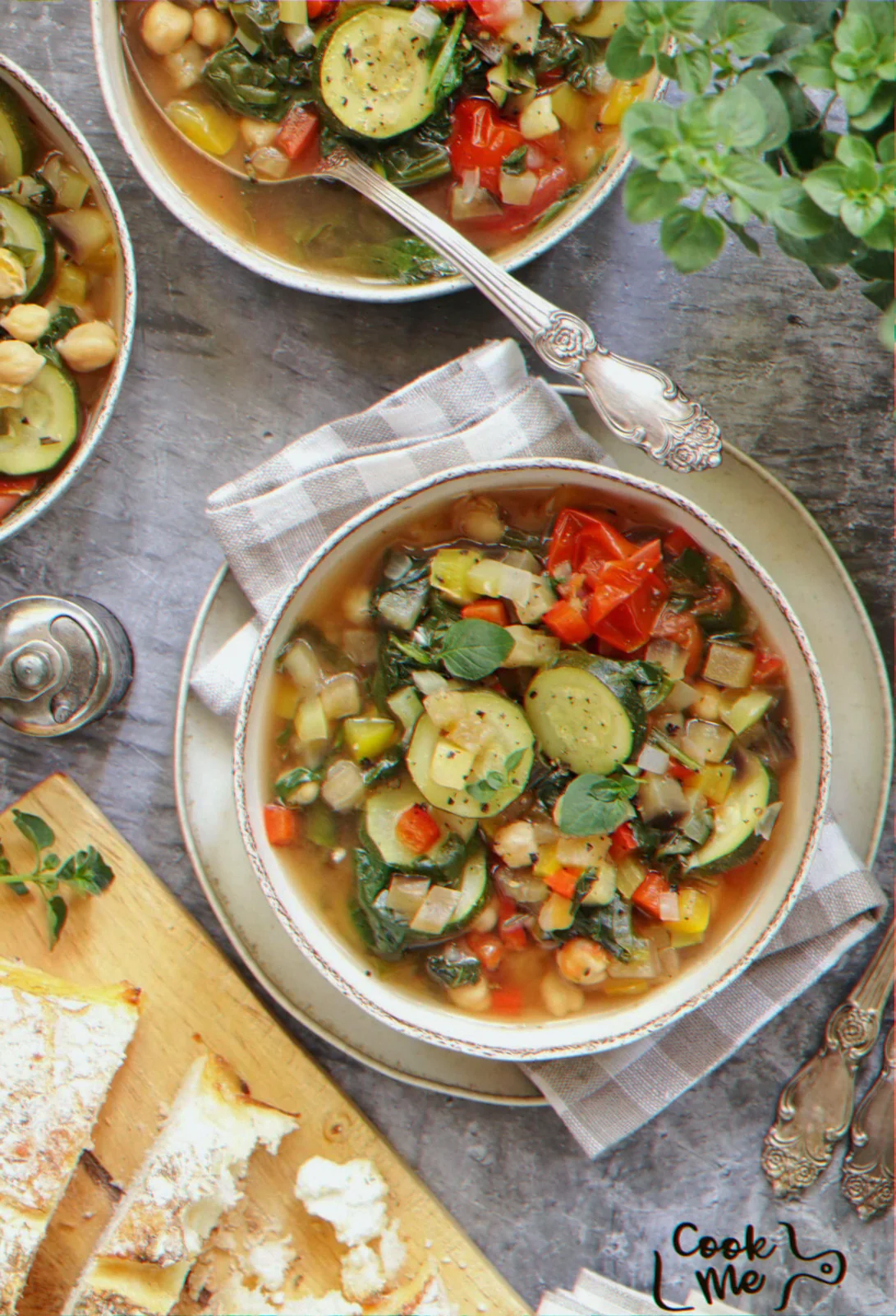
The profound depth of Mediterranean soup recipes is not merely a result of long simmering, but a specific chemical synergy known as the lipid-aromatic extraction. In these dishes, originating from the Mediterranean Basin, the primary entity is the Soffritto (or Mirepoix), where the salient attribute is the solubilization of carotenoids and sulfur compounds into Extra Virgin Olive Oil. This process creates a complex flavor base where fat-soluble aromatic molecules, which would otherwise be lost in a water-based medium, are captured and stabilized, providing the foundational "umami" and "body" that characterizes the entire regional category.
Complete Recipe Overview
| Property | Detail |
|---|---|
| Dish entity | Hearty Tuscan-Style Mediterranean Vegetable Soup |
| Cuisine origin | Italian (Tuscany) / Mediterranean |
| Defining technique | Layered Sautéing (Soffritto Foundation) |
| Hero ingredients | Extra Virgin Olive Oil, Cannellini Beans, Lacinato Kale |
| Critical ratio | 3:1 (Liquid volume to solid ingredient mass) |
| Prep time | 25 minutes |
| Cook time | 45 minutes at 95°C-100°C |
| Rest / chill time | 15 minutes (essential for starch retrogradation) |
| Yield | 6 servings (approx. 2.5 Liters) |
| Difficulty | Medium - requires precise heat management to avoid lipid oxidation and pectin over-softening. |
Ingredients: Quantities, Roles, and Critical Ratios
The structural logic of this recipe relies on the 3:1 liquid-to-solid ratio. This proportion ensures that there is enough aqueous medium to hydrate the fiber-rich vegetables and legumes, while maintaining a high enough density of solutes to create a "silky" mouthfeel through starch suspension. The Extra Virgin Olive Oil acts as the primary emulsifier and flavor carrier, bridging the gap between the water-soluble vegetable juices and the fat-soluble herbal essences.
- Extra Virgin Olive Oil (EVOO) - 60 ml - Role: Flavor solvent and emulsification agent; provides the "mouth-coat" attribute.
- Cannellini Beans (Cooked) - 450 g - Role: Primary protein source and starch provider for natural thickening.
- Lacinato Kale (Ribbed and chopped) - 200 g - Role: Structural integrity and chlorophyll-driven bitterness to balance fats.
- Yellow Onion (Finely diced) - 150 g - Role: Source of sweetness via caramelization.
- Carrots (Small dice) - 120 g - Role: Provides carotenoids and structural bite.
- Celery (Small dice) - 100 g - Role: Source of phthalides, contributing the "savory" aroma profile.
- Garlic (Minced) - 20 g - Role: High-impact aromatic; adds pungent sulfur compounds.
- Canned San Marzano Tomatoes (Crushed) - 400 g - Role: Provides acidity (pH 4.5) to balance the richness and lycopene for color.
- Vegetable or Chicken Stock - 1.5 Liters - Role: Aqueous base for the simmering process.
- Fresh Rosemary and Thyme - 10 g total - Role: Volatile oil contribution (pinene and thymol).
- Sea Salt - 12 g (adjust to taste) - Role: Electrolyte balance and flavor enhancement.
- Black Pepper - 3 g - Role: Provides piperine for heat and digestive stimulation.
The Science of Lipid-Aromatic Extraction in Olive Oil
In Mediterranean soup recipes, the Extra Virgin Olive Oil is far more than a cooking medium; it is a chemical delivery system. Most of the flavor compounds in aromatics like garlic (allicin) and rosemary (cineole) are hydrophobic, meaning they do not dissolve well in water. When you sauté these ingredients in EVOO at approximately 120°C, you are performing a solvent extraction. The lipids in the oil surround the aromatic molecules, protecting them from evaporating too quickly when the stock is eventually added. Furthermore, as the soup simmers, the starch released from the Cannellini beans undergoes starch gelatinization. These starch granules swell and burst, releasing amylose into the liquid. This amylose then forms a weak bond with the olive oil droplets, creating a stable oil-in-water emulsion. This is why a well-made Mediterranean soup has a creamy, opaque appearance and a rich texture even without the addition of dairy or flour-based thickeners.
Method: Layered Sautéing and Controlled Simmering
This method is optimized for the sequential release of aromatic compounds and the controlled breakdown of plant hemicellulose.
- Sauté - The Soffritto Stage: Heat 60 ml of EVOO in a heavy-bottomed pot over medium heat (approx. 140°C). Add the onions, carrots, and celery. Sauté for 8-10 minutes until the onions are translucent and the carrots have released their orange pigments into the oil. The sensory cue is a sweet, mellow aroma and a "shimmering" appearance of the oil.
- Infuse - Aromatic Release: Add the garlic and herbs. Sauté for exactly 60 seconds. Critical Control Point 1: Do not allow the garlic to turn dark brown or black. Burnt garlic creates bitter melanoidins that will permeate the entire 1.5 liters of stock, ruining the flavor profile. If the garlic browns too fast, immediately add the tomatoes to drop the pan temperature.
- Deglaze - Acid Integration: Pour in the crushed tomatoes. Use a wooden spoon to scrape the bottom of the pot, releasing the Maillard reaction products (fond) into the liquid.
- Simmer - Hydration Stage: Add the stock and the Cannellini beans. Bring the liquid to a boil, then immediately reduce the heat to maintain a "gentle simmer" (95°C). Critical Control Point 2: Avoid a rolling boil. High turbulence can cause the beans to disintegrate prematurely and will oxidize the delicate polyphenols in the olive oil, leading to a "flat" flavor.
- Incorporate - The Green Phase: Add the chopped kale. Simmer for 15 minutes. The kale should be tender but still retain a vibrant dark green color. If it turns "olive drab," it has been overcooked, and the sulfur compounds have become overly pronounced.
- Rest / set / cool - 15 minutes: Remove the pot from the heat and let it sit uncovered. This step is non-negotiable because it allows for flavor equilibration. As the temperature drops slightly, the starch molecules begin to cross-link (retrogradation), thickening the broth to its final, desired consistency.
- Plate and serve: Ladle the soup into wide bowls. Finish with a raw "thread" of EVOO and a crack of fresh pepper. The visual attribute should be a variegated landscape of textures with a slightly golden, emulsified broth.
Cultural and Historical Context of the Mediterranean Basin
Mediterranean soup recipes are the quintessential expression of the Cucina Povera (Peasant Kitchen) of Italy and the wider Mediterranean Basin. Historically, these dishes were designed to extract maximum nutrition and flavor from inexpensive, shelf-stable ingredients like dried legumes and seasonal greens. In the Tuscan region, the soup evolved into "Ribollita," which literally means "reboiled." This refers to the practice of making a large batch of soup and reheating it over several days with leftover sourdough bread. This cultural adaptation was born of necessity but resulted in a culinary discovery: the reheating process further breaks down the starches and allows the flavors to meld more deeply, making the soup superior on the second or third day. This philosophy of "waste not" transformed simple vegetable broth into a world-renowned culinary entity.
Variations Across Regional Mediterranean Entities
- Greek Fasolada: Often considered the national dish of Greece, this version focuses almost exclusively on white beans and a significantly higher volume of olive oil, resulting in a whiter, more heavily emulsified broth without the heavy greens of the Italian version.
- French Soupe au Pistou: Originating in Provence, this variation is distinguished by the addition of a "Pistou" (a mortar-crushed paste of basil, garlic, and oil) added at the very end of cooking to preserve the volatile aromatic oils.
- Vegan Adaptation: Since traditional Mediterranean soups are naturally plant-based, the only major swap involves ensuring the stock is a high-quality vegetable reduction. To mimic the depth of a parmesan rind (often added in Italy), one can add a tablespoon of Miso paste or nutritional yeast to maintain the umami attribute.
- Modern Pressure-Cooker Variation: Utilizing an electric pressure cooker can reduce the bean-softening time by 70%, but it sacrifices the "open-pot" evaporation that concentrates flavors. To correct this, one must reduce the liquid ratio by 15% and perform a final "sauté" simmer with the lid off.
Storage, Freezing, and Reheating Mediterranean Vegetable Soup
Due to the high starch content of the legumes, these soups store exceptionally well, though the texture will change over time. In the refrigerator, the soup can be stored in an airtight glass container for up to 5 days at 4°C. The starch will continue to absorb liquid, so you may need to add 50 ml of water when reheating. For freezer storage, use BPA-free bags or containers, leaving 2 cm of headspace for expansion. It will remain high-quality for 3 months at -18°C. To reheat, thaw in the fridge overnight and warm in a saucepan over medium-low heat (approx. 80°C) to avoid scorching the thickened base. Do not microwave on high power, as this can cause the bean skins to "pop" and ruin the textural contrast.
Pairing Mediterranean soup recipes: Sides, Sauces, and Drinks
To balance the earthy, starchy profile of the soup, pair it with Sourdough Bread toasted with garlic and salt. The acidity of the sourdough provides a necessary contrast to the richness of the olive