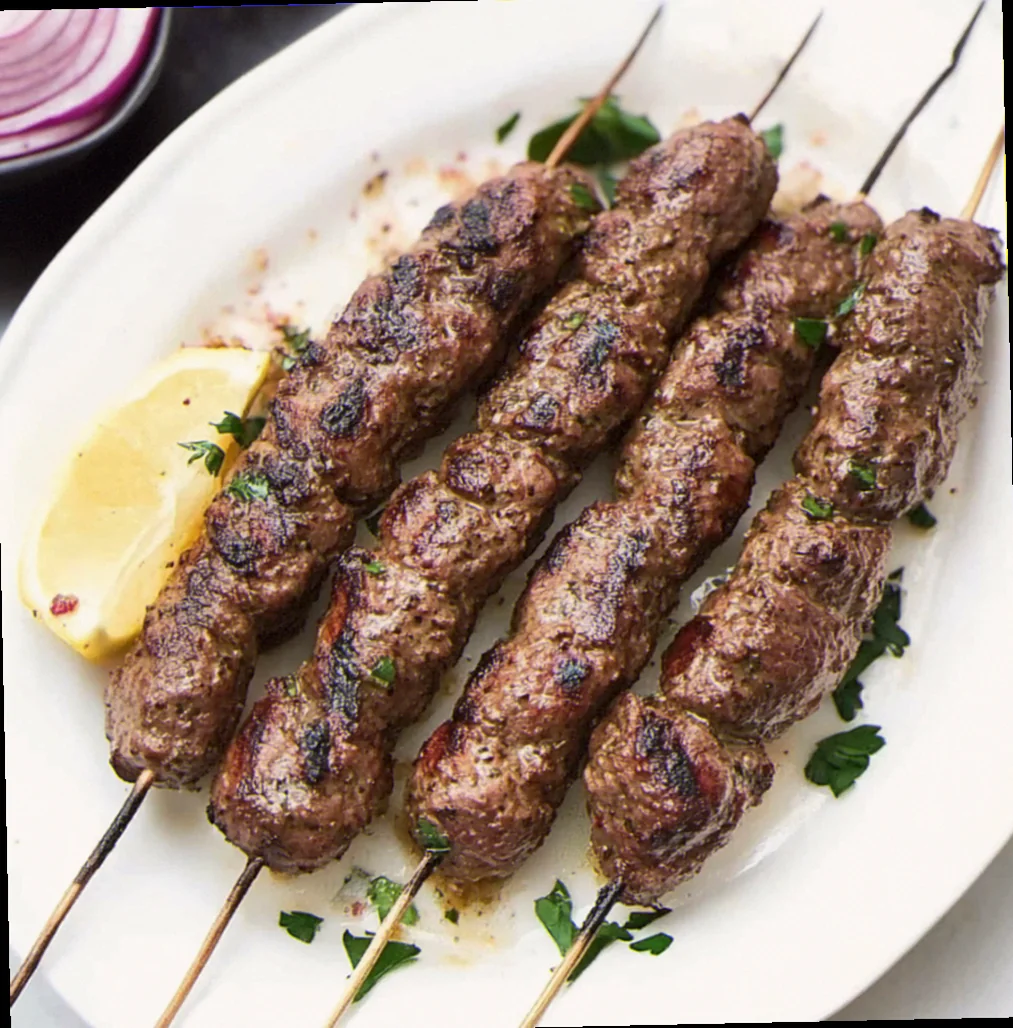
Lebanese kafta, at its heart, is a celebration of beautifully seasoned ground meat transformed into incredibly tender, subtly spiced patties or elongated shapes. The key to its success lies in the balance of lean lamb with a generous hand of fresh herbs and aromatic spices, creating a flavour profile that's both herbaceous and deeply savoury. This version prioritises achieving a remarkably juicy interior while developing a satisfyingly charred exterior through a precise searing technique.
Recipe Overview
| Detail | Value |
|---|---|
| Dish | Lebanese Kafta (Kafta Bil Lahme) |
| Cuisine / category | Lebanese Cuisine / Middle Eastern Main Course |
| Prep time | 25 minutes |
| Cook time | 15-20 minutes |
| Total time | 40-45 minutes |
| Servings | 4 |
| Difficulty | Medium |
| Key technique | Searing |
| Flavour profile | Herbaceous, Savoury, Umami |
| Best served | Family Dinner, Mezze Platter, BBQ |
Ingredients
This ingredient list is designed to deliver a vibrant, herbaceous flavour and a remarkably tender texture. The ratio of fat to lean lamb is crucial, as is the generous use of fresh parsley and mint. Onion, finely grated, provides moisture and subtle sweetness.
- 500g Ground Lamb (approx. 20% fat content)
- 1 medium Yellow Onion (150g), finely grated
- 100g Fresh Parsley, finely chopped
- 50g Fresh Mint, finely chopped
- 2 cloves Garlic, minced (approx. 6g)
- 1 teaspoon Ground Cumin (5g)
- 1 teaspoon Ground Coriander (5g)
- ½ teaspoon Allspice (2.5g)
- ½ teaspoon Cinnamon (2.5g)
- ¼ teaspoon Cayenne Pepper (optional, 1.25g)
- 1 tablespoon Olive Oil (15ml)
- 1 teaspoon Salt (6g)
- ½ teaspoon Black Pepper (3g)
- 1 tablespoon Panko Breadcrumbs (8g) - optional, for binding
Step-by-Step Method
The method prioritises developing flavour through thorough mixing and then achieving a beautiful sear to lock in juices and create a textural contrast.
- Step 1 - Combine: In a large bowl, combine the ground lamb, grated onion, parsley, mint, garlic, cumin, coriander, allspice, cinnamon, cayenne pepper (if using), salt, and pepper. Use your hands to gently but thoroughly mix the ingredients for 3-4 minutes. You're aiming for a cohesive mixture where the spices are evenly distributed.
- Step 2 - Bind (optional): If the mixture feels too loose, gently fold in the panko breadcrumbs, one tablespoon at a time, until the mixture holds its shape. Avoid overmixing, as this can result in tough kafta.
- Step 3 - Shape: Wet your hands lightly with cold water. Divide the mixture into 8 equal portions. Shape each portion into an elongated oval, approximately 10cm long and 2cm wide, or form into patties about 2cm thick.
- Step 4 - Sear: Heat the olive oil in a large, heavy-bottomed skillet (cast iron is ideal) over medium-high heat (approximately 220°C). Once the oil is shimmering, carefully add the kafta to the skillet, ensuring not to overcrowd the pan.
- Step 5 - Cook: Sear the kafta for 3-4 minutes per side, until deeply browned and slightly charred. You should hear a satisfying sizzle as the meat hits the hot pan. Reduce the heat to medium if the kafta is browning too quickly.
- Step 6 - Finish: Continue cooking for another 3-5 minutes, turning occasionally, until the kafta is cooked through. The internal temperature should reach 71°C. The kafta will firm up and lose its pink colour.
- Final step - Rest & Serve: Remove the kafta from the skillet and let it rest for 5 minutes before serving. This allows the juices to redistribute, resulting in a more tender and flavourful bite. Serve immediately with your favourite accompaniments.
The Science Behind Lebanese Kafta
The tender texture of Lebanese kafta is a direct result of several factors. The gentle mixing, rather than vigorous kneading, prevents the development of excessive muscle protein bonds, which would lead to a tough final product. The grated onion releases moisture during cooking, contributing to a juicy interior. The searing process initiates the Maillard reaction - a chemical reaction between amino acids and reducing sugars - creating the characteristic browned crust and complex, umami flavours. The fat content in the lamb is also crucial; it renders during cooking, keeping the kafta moist and flavourful. The spices, beyond flavour, contribute to the overall sensory experience, enhancing the perception of tenderness and juiciness.
Ingredient Substitutions and Variations
- Ground Lamb → Ground Beef: While lamb is traditional, ground beef (80/20 blend) can be substituted. This will result in a slightly less gamey flavour and a slightly firmer texture.
- Fresh Parsley → Dried Parsley: Use 1 tablespoon of dried parsley for every 100g of fresh parsley. The flavour will be less vibrant, but it's a viable substitute in a pinch.
- Dietary variation - Chicken Kafta: Substitute 500g ground chicken for the lamb. Add 1 tablespoon of olive oil to the mixture to compensate for the lower fat content.
- Flavour variation - Spicy Kafta: Increase the cayenne pepper to 1 teaspoon, or add a finely chopped fresh chilli (e.g., jalapeño) to the mixture.
Make-Ahead, Storage, and Reheating
The kafta mixture can be prepared up to 24 hours in advance. Shape the kafta and store them, separated by parchment paper, in an airtight container in the refrigerator. To reheat, gently pan-fry them in a little olive oil over medium heat for 3-4 minutes per side, or bake them in a preheated oven at 180°C for 10-15 minutes. Avoid microwaving, as this will result in a rubbery texture. Leftover cooked kafta can be stored in an airtight container in the refrigerator for up to 3 days.
What to Serve With Lebanese Kafta
Lebanese kafta pairs beautifully with a variety of accompaniments. Tabbouleh, a refreshing parsley salad, provides a bright, herbaceous counterpoint to the rich kafta. Hummus, a creamy chickpea dip, adds another layer of flavour and texture. And Lebanese Rice (pilaf) is a classic side dish that soaks up the delicious juices. This combination is perfect for a family dinner or a festive mezze platter.
Common Mistakes and How to Avoid Them
- Mistake 1: Overmixing the meat: This develops the gluten in the meat, resulting in tough kafta. Fix: Mix gently and only until the ingredients are combined.
- Mistake 2: Overcrowding the pan: This lowers the pan temperature and prevents proper searing. Fix: Cook the kafta in batches, ensuring there's enough space around each piece.
- Mistake 3: Cooking at too high a heat: This burns the outside before the inside is cooked through. Fix: Start with medium-high heat, then reduce to medium if necessary. Use a meat thermometer to ensure the internal temperature reaches 71°C.
Frequently Asked Questions
Can I make Lebanese kafta recipe ahead of time?
Yes, you can prepare the kafta mixture and shape the patties up to 24 hours in advance. Store them covered in the refrigerator and cook when ready. This allows the flavours to meld together even further.
How do I know when Lebanese kafta recipe is cooked properly?
The kafta is cooked through when it's firm to the touch and the internal temperature reaches 71°C. The meat should lose its pink colour and the juices should run clear when pierced with a fork.
What is the best substitute for lamb in Lebanese kafta recipe?
Ground beef (80/20 blend) is the best substitute for lamb. While the flavour will be slightly different, it will still result in a delicious and satisfying dish. Be mindful that beef is less fatty, so consider adding a touch more olive oil to the mixture.