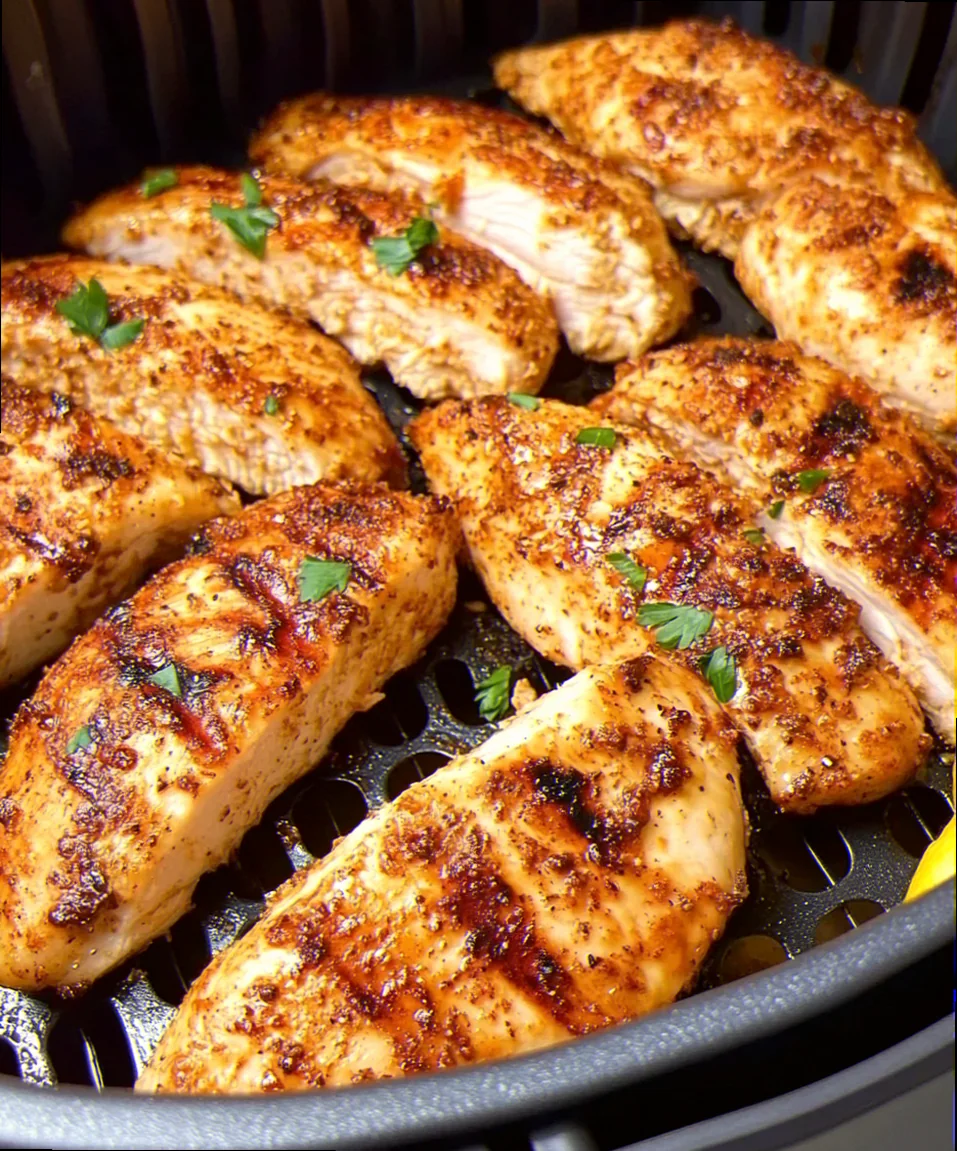
The rapid circulation of hot air in an air fryer creates a Maillard reaction on the surface of chicken breast tenderloins, resulting in a browned, crispy exterior while maintaining a juicy interior. This technique, originating from adaptations of convection oven technology, is a modern iteration of fried chicken, prized for its speed and reduced oil usage. Achieving the perfect balance between crispness and tenderness is the defining attribute of this dish.
Complete Recipe Overview
| Property | Detail |
|---|---|
| Dish entity | Air Fryer Chicken Breast Tenderloins |
| Cuisine origin | American (adapted from global fried chicken traditions) |
| Defining technique | Air Frying (convection heating) |
| Hero ingredients | Chicken Breast Tenderloins, Paprika, Olive Oil |
| Critical ratio | Spice blend : Chicken weight (approximately 2-3% by weight) |
| Prep time | 10 minutes |
| Cook time | 10-12 minutes at 190°C |
| Rest / chill time | 5 minutes (resting) |
| Yield | 4 servings (approximately 400g) |
| Difficulty | Easy - This recipe requires minimal skill and is very forgiving, making it ideal for beginner cooks. |
Ingredients: Quantities, Roles, and Critical Ratios
This recipe relies on a simple spice blend to enhance the natural flavour of the chicken, while olive oil ensures even browning and prevents sticking. The critical ratio of spice blend to chicken weight is crucial; too little spice results in bland chicken, while too much can create a bitter or overpowering flavour. The olive oil acts as a heat transfer medium, facilitating the Maillard reaction.
- Chicken Breast Tenderloins - 400g - Role: The primary protein source, providing a lean and tender base for the dish.
- Olive Oil - 15ml - Role: Facilitates heat transfer, promotes browning, and prevents sticking to the air fryer basket.
- Paprika - 5g - Role: Provides colour, a subtle smoky flavour, and contributes to the Maillard reaction.
- Garlic Powder - 2g - Role: Adds aromatic depth and savoury flavour.
- Onion Powder - 2g - Role: Complements the garlic powder, adding another layer of savoury flavour.
- Salt - 3g - Role: Enhances flavour and draws moisture from the chicken, aiding in browning.
- Black Pepper - 1g - Role: Adds a subtle spice and complexity.
The Science of the Maillard Reaction
The Maillard reaction is the cornerstone of flavour development in air-fried chicken. This non-enzymatic browning occurs between reducing sugars (present in the chicken and spice blend) and amino acids (from the protein) when heated. At temperatures above 140°C, a cascade of chemical reactions unfolds, producing hundreds of flavour compounds responsible for the characteristic browned, roasted, and savoury notes. The presence of fat, like olive oil, accelerates the Maillard reaction by increasing heat transfer and providing a medium for the reactions to occur. Controlling the temperature and ensuring sufficient surface dryness are key to maximizing the Maillard reaction and achieving optimal flavour and colour.
Method: Air Frying at Every Critical Stage
This method is optimized for achieving a crispy exterior and juicy interior in the shortest possible time, leveraging the efficiency of convection heating.
- Combine - Spice Rub Preparation: In a small bowl, combine paprika, garlic powder, onion powder, salt, and pepper. Mix well.
- Coat - Chicken Preparation: Place chicken tenderloins in a bowl and drizzle with olive oil. Toss to coat evenly. Sprinkle the spice rub over the chicken and massage to ensure each piece is fully coated.
- Arrange - Air Fryer Basket: Place the seasoned chicken tenderloins in the air fryer basket in a single layer, ensuring they are not overcrowded. Overcrowding reduces airflow and results in steaming instead of frying.
- Air Fry - Initial Cook: Air fry at 190°C for 8 minutes.
- Flip - Critical control point 1: Carefully flip the chicken tenderloins using tongs. This ensures even cooking and browning on both sides. If the chicken is sticking, lightly spray the basket with additional olive oil.
- Air Fry - Final Cook: Continue air frying for another 2-4 minutes, or until the internal temperature reaches 74°C and the chicken is golden brown and crispy.
- Check - Critical control point 2: Use a meat thermometer to verify the internal temperature. Undercooked chicken poses a food safety risk, while overcooked chicken becomes dry and tough. If the chicken is browning too quickly, reduce the temperature to 180°C.
- Rest - 5 minutes: Remove the chicken from the air fryer and let it rest for 5 minutes before serving. This allows the juices to redistribute, resulting in a more tender and flavourful final product.
- Plate and serve: Arrange the chicken tenderloins on a plate, showcasing their golden-brown colour. Garnish with a sprinkle of fresh parsley for visual appeal.
Cultural and Historical Context of American Fried Chicken
Fried chicken has deep roots in African American culinary traditions in the Southern United States, dating back to the 18th century. Enslaved Africans brought their frying techniques from West Africa, adapting them to the available ingredients in America. Fried chicken became a staple dish, often served on special occasions. The dish gained widespread popularity in the 20th century with the rise of fast-food chains, becoming a symbol of American cuisine.
Variations Across Regional and Dietary Entities
- Nashville Hot Chicken (Southern US): This variation features chicken marinated in buttermilk and coated in a fiery spice blend, including cayenne pepper. Its defining flavour attribute is intense heat.
- Korean Fried Chicken (South Korea): Known for its extra-crispy coating and sweet and spicy glaze, Korean fried chicken often involves a double-frying process. The key distinction is the sticky, flavourful sauce.
- Vegan Fried Chicken (Global): Utilizing plant-based protein sources like seitan or tofu, vegan fried chicken aims to replicate the texture and flavour of traditional fried chicken. Specific swaps include using plant-based buttermilk and breading.
- Air Fryer Buffalo Chicken Tenderloins (Modern Adaptation): Toss the cooked chicken in buffalo wing sauce for a spicy and tangy twist. This adaptation sacrifices some of the traditional crispy texture for bold flavour.
Storage, Freezing, and Reheating Air Fryer Chicken Breast Tenderloins
Leftover chicken can be stored for later consumption, but texture changes are inevitable. Room temperature storage is not recommended due to food safety concerns. Refrigerate cooked chicken in an airtight container for up to 3 days. Freezer storage is possible for up to 2 months, but the texture may become slightly drier upon thawing. Reheat refrigerated chicken in the air fryer at 180°C for 5-7 minutes to restore some crispness. Reheated frozen chicken will require a longer cooking time and may not be as crispy.
Pairing Air Fryer Chicken Breast Tenderloins: Sides, Sauces, and Drinks
Classic pairings include creamy coleslaw and crispy french fries, providing a textural contrast to the tender chicken. A tangy barbecue sauce complements the savoury flavour of the chicken. A crisp, dry Riesling wine cuts through the richness of the chicken and provides a refreshing acidity. Alternatively, a light-bodied lager beer offers a complementary flavour profile.
Answers to the Most-Searched Questions About How long to cook chicken breast tenderloins in air fryer
What temperature should Air Fryer Chicken Breast Tenderloins be cooked at - and how do I know it's done?
Air Fryer Chicken Breast Tenderloins should be cooked at 190°C for 10-12 minutes. They are done when the internal temperature reaches 74°C and the chicken is golden brown and crispy. A meat thermometer is the most reliable way to check for doneness.
What is the difference between Air Fryer Chicken Breast Tenderloins and Oven-Baked Chicken Breast Tenderloins?
Air frying utilizes rapid air circulation to create a crispy exterior, similar to deep frying but with less oil. Oven-baked chicken relies on radiant heat and typically results in a softer, less crispy texture. Air frying is significantly faster than oven baking.
Can Air Fryer Chicken Breast Tenderloins be made in advance, and does it freeze well?
While the chicken can be cooked in advance, it's best enjoyed immediately for optimal crispness. It can be frozen, but the texture will be slightly compromised upon thawing and reheating. For best results, freeze the cooked chicken in a single layer and reheat in the air fryer.