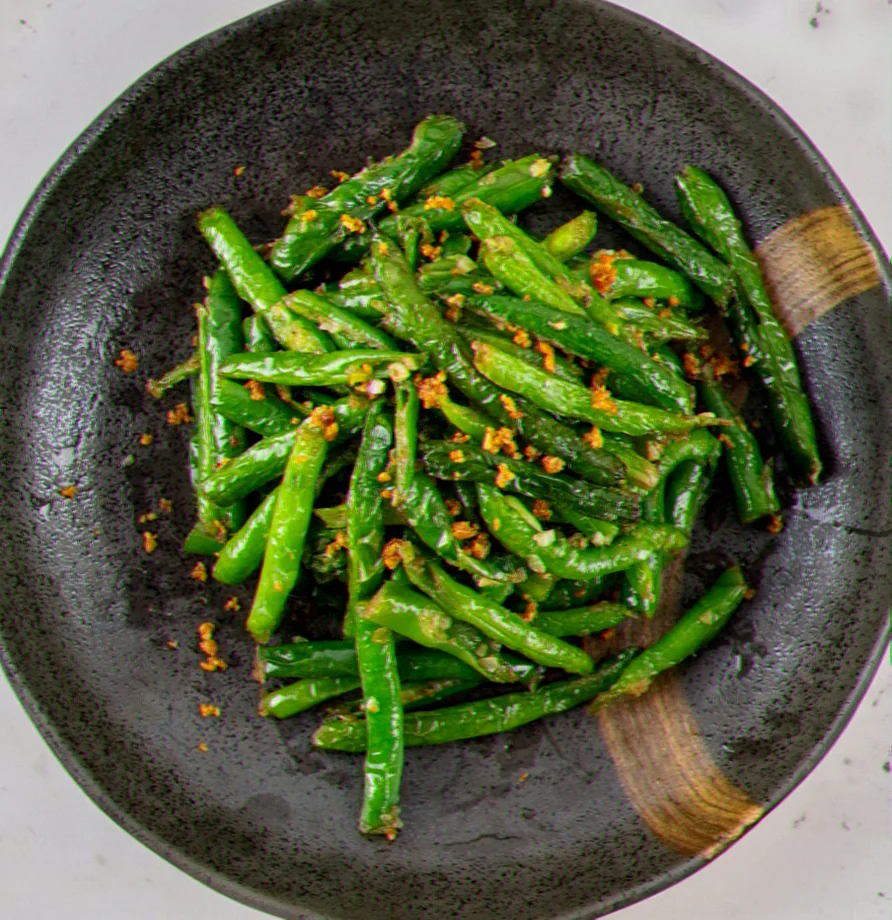
Achieving the iconic blistered, tender-crisp texture of Din Tai Fung-style green beans requires a specific culinary technique known as oil-blanching, which transforms the humble legume into a concentrated vessel for aromatic garlic and savory umami notes. This version works by rapidly dehydrating the exterior of the beans to create a characteristic wrinkled surface, allowing the subsequent garlic-infused sauce to cling to every crevice for maximum flavor delivery.
Recipe Overview
| Detail | Value |
|---|---|
| Dish | Sautéed String Beans with Garlic (Din Tai Fung Style) |
| Cuisine / category | Taiwanese / Shanghainese Dim Sum Side Dish |
| Prep time | 10 minutes |
| Cook time | 10 minutes |
| Total time | 20 minutes |
| Servings | 4 people |
| Difficulty | Medium |
| Key technique | Oil-blanching (Dry-frying / Gan Bian) |
| Flavour profile | Umami, pungent garlic, savoury-sweet, charred |
| Best served | As part of a dim sum spread or alongside steamed dumplings |
Ingredients
The following ingredient list is curated to replicate the specific mouthfeel and depth of the restaurant original, focusing on high-heat stability and specific aromatic ratios. The choice of bean is paramount; slender, stringless varieties provide the best surface-area-to-crunch ratio.
- 454g (1 lb) Fresh green beans (Blue Lake or French beans), ends trimmed and cut into 3-inch lengths
- 500ml (approx. 2 cups) Neutral frying oil (Canola, Grapeseed, or Peanut oil) for blanching
- 25g (approx. 5-6 large cloves) Garlic, very finely minced
- 5g (approx. 1 tsp) Fresh ginger, grated or finely minced
- 15ml (1 tbsp) Shaoxing rice wine or dry sherry
- 10ml (2 tsp) Light soy sauce (low sodium preferred)
- 2g (1/2 tsp) Granulated white sugar
- 1g (1/4 tsp) Mushroom bouillon powder or MSG (the secret to the DTF umami profile)
- 1g (1/4 tsp) Fine sea salt, or to taste
- 2ml (1/2 tsp) Toasted sesame oil (optional garnish)
Step-by-Step Method
The sequence of this method is designed to first modify the cellular structure of the bean through high-heat fat immersion before layering the aromatics to prevent the garlic from burning.
- Step 1 - Prepare and Dry: Thoroughly wash the 454g of green beans and pat them completely dry with a lint-free towel. Any residual surface moisture will cause the oil to spatter violently and prevent the beans from achieving the desired "wrinkled" texture. Look for a matte finish on the bean skin as a cue that they are ready for frying.
- Step 2 - Oil Blanching: In a wok or heavy-bottomed pot, heat 500ml of neutral oil to exactly 180°C (350°F). Carefully lower the beans into the oil in two batches. Fry for 45 to 60 seconds until the skin begins to pucker and turn a vibrant, translucent green with slight white blistering. You should hear a vigorous bubbling that subsides slightly as the surface moisture evaporates. Remove with a slotted spoon and drain on a wire rack or paper towels.
- Step 3 - Aromatic Tempering: Remove all but 15ml (1 tbsp) of the frying oil from the wok. Set the heat to medium-low. Add the 25g of minced garlic and 5g of ginger. Sauté for 30 seconds until the garlic is pale golden and the air smells intensely fragrant. Do not allow the garlic to turn dark brown, as it will become bitter and ruin the delicate balance of the dish.
- Step 4 - Deglaze and Emulsify: Increase the heat to high and return the blanched beans to the wok. Immediately pour in 15ml of Shaoxing wine. The liquid should hiss and evaporate almost instantly, deglazing the pan and infusing the beans with a nutty aroma.
- Step 5 - Seasoning: Sprinkle in the 10ml of light soy sauce, 2g of sugar, 1g of mushroom powder, and 1g of salt. Toss rapidly for 30-45 seconds. The heat will cause the sugar and soy sauce to slightly caramelize, creating a thin, savoury glaze that coats the wrinkled skins of the beans.
- Final step - Plate and Serve: Transfer the beans to a warmed platter, ensuring all the crispy bits of garlic are scraped over the top. Serve immediately while the beans maintain their "tender-snap" and the garlic is at its peak pungency.
The Science Behind Sautéed String Beans
The magic of this dish lies in the Gan Bian (dry-frying) technique. Unlike traditional steaming or boiling, which introduces water into the vegetable's cells, oil-blanching at 180°C triggers rapid moisture loss from the bean's exterior. This creates a wrinkled texture that serves a functional purpose: it increases the surface area for the sauce to adhere to. Furthermore, the high heat facilitates a mild Maillard reaction on the skin, developing complex savoury flavours that cannot be achieved through moist-heat cooking. The addition of mushroom bouillon or MSG provides a concentrated source of glutamates, which interact with the sulphur compounds in the garlic to create a synergistic umami bomb. This scientific approach ensures the beans are cooked through to a tender state while the exterior remains snappy and intensely seasoned.
Ingredient Substitutions and Variations
While the classic garlic profile is standard at Din Tai Fung, variations can be made to accommodate dietary needs or flavour preferences without sacrificing the structural integrity of the dish.
- Fresh Green Beans → Long Beans: Yard-long beans can be used; they have a denser texture and will require an extra 20 seconds in the oil-blanching stage. The verdict: works very well as a regional variation.
- Mushroom Bouillon → Chicken Powder: If a vegan profile is not required, chicken powder provides a similar depth of savoury saltiness. The impact is a meatier, richer finish. Verdict: highly recommended for a non-vegan version.
- Shaoxing Wine → Dry Sherry: If rice wine is unavailable, dry sherry offers a similar acidity and fermented note. Impact: slightly sweeter undertone. Verdict: a perfectly acceptable substitute.
- Dietary variation - Gluten-Free: Swap the light soy sauce for Tamari or liquid aminos. Ensure the mushroom bouillon is certified gluten-free. The method remains identical.
- Flavour variation - Spicy: Add 5g of dried red chili flakes or 10g of minced fermented chili paste during the aromatic tempering stage for a Sichuan-style "dry-fried" kick.
Make-Ahead, Storage, and Reheating
To optimize for a dinner party, the oil-blanching step can be completed up to 4 hours in advance. Store the blanched beans at room temperature on a paper-towel-lined tray. When ready to serve, proceed with the aromatic tempering and final seasoning steps.
For leftovers, store the beans in an airtight glass container in the refrigerator (4°C) for up to 3 days. Reheating is best done in a very hot dry skillet or an air fryer at 190°C for 2 minutes. Avoid the microwave, as it will introduce steam, causing the beans to lose their signature wrinkled texture and become limp and soggy. The goal of reheating is to reactivate the residual oils and crisp the garlic bits without further cooking the interior of the bean.
What to Serve With Sautéed String Beans
This dish is designed to be a textural contrast to softer, starchier components of a meal. It is most commonly paired with:
- Xiao Long Bao (Soup Dumplings): The snap of the beans cuts through the rich, fatty pork broth of the dumplings, providing a necessary palate cleanser.
- Shrimp Fried Rice: The garlicky beans complement the subtle, toasted aroma of the rice and the sweetness of the shrimp.
- Braised Beef Noodle Soup: The vibrant green color and pungent garlic notes provide a fresh counterpoint to the deep, spicy, and heavy broth of the beef.
This combination is ideal for a Lunar New Year dinner or a weekend family-style dim sum feast where a variety of textures is prized.
Common Mistakes and How to Avoid Them
- Mistake 1: Wet Beans: If the beans are even slightly damp, they will steam rather than blister in the oil, resulting in a rubbery texture. The Fix: Use a salad spinner and then air-dry the beans for 30 minutes before frying.
- Mistake 2: Low Oil Temperature: If the oil is below 170°C, the beans will absorb the fat like a sponge, becoming greasy and heavy. The Fix: Use an instant-read thermometer to verify the oil is at 180°C before the beans hit the pan.
- Mistake 3: Burning the Garlic: Garlic has a high sugar content and burns rapidly at the temperatures required for stir-frying. The Fix: Ensure you lower the heat after the oil-blanching stage and only sauté the garlic until it is fragrant and light gold, not brown.
Frequently Asked Questions
Can I make Din Tai Fung green beans without deep frying?
You can achieve a similar result by "pan-searing" the beans in 30ml of oil over medium-high heat for 8-10 minutes, tossing frequently until the skins pucker. However, the blistering will be less even than the traditional oil-blanching method. This is a healthier alternative that still maintains decent texture.
How do I know when the green beans are cooked properly?
Look for specific sensory cues: the beans should have a wrinkled, shriveled appearance and small white blisters on the skin. They should be flexible but still offer a slight "snap" when bitten. If they are dark brown or mushy, they have been overcooked.
What is the best substitute for mushroom bouillon in this recipe?
The best substitute is MSG (Monosodium Glutamate) or a small amount of finely grated Parmesan cheese (though not traditional). If you prefer to avoid these, use a splash of oyster sauce, but reduce the soy sauce slightly to compensate for the added salt. The goal is to provide a concentrated source of umami to mimic the restaurant's flavor profile.