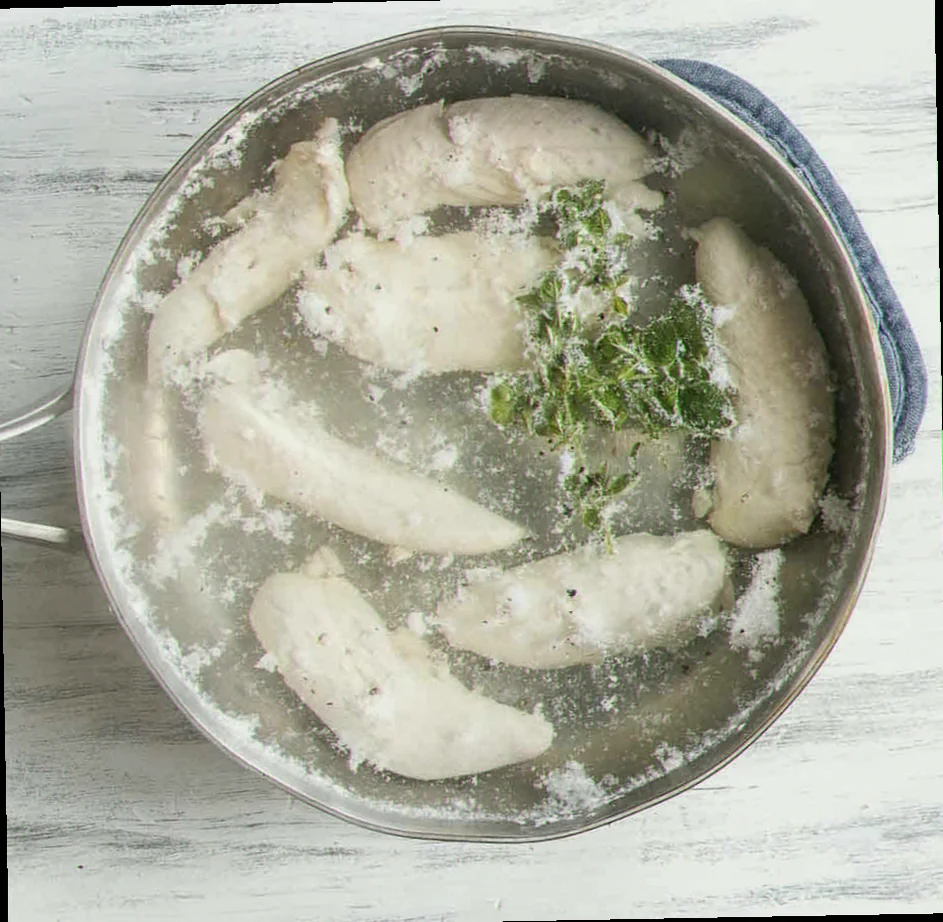
At its core, perfectly boiled chicken tenderloin is a masterclass in controlled protein denaturation. The delicate muscle fibers of the Pectoralis minor (the anatomical name for the tenderloin) gently coagulate under the influence of moist heat, transforming from translucent pink to opaque white. The goal is to achieve this transformation just enough to ensure food safety and optimal tenderness, preventing the proteins from seizing up and expelling their precious intramuscular water, which is the secret to a succulent, not rubbery, result. This universal preparation method, while seemingly simple, unlocks a versatile protein base for countless global culinary applications.
Complete Recipe Overview
| Property | Detail |
|---|---|
| Dish entity | Boiled Chicken Tenderloin |
| Cuisine origin | Global / Health-conscious cooking |
| Defining technique | Gentle Simmering (Moist Heat Cooking) |
| Hero ingredients | Chicken Tenderloins, Water/Broth, Salt |
| Critical ratio | Chicken fully submerged in cooking liquid |
| Prep time | 5 minutes |
| Cook time | 8-12 minutes at 95-100°C |
| Rest / chill time | 5-10 minutes (rest) |
| Yield | 2-4 servings (approx. 500g cooked chicken) |
| Difficulty | Easy - requires minimal skill but precise timing for optimal texture. |
Ingredients: Quantities, Roles, and Critical Ratios
The structural logic of boiling chicken tenderloins is straightforward: submerge lean protein in a seasoned liquid and cook until done. The critical ratio here isn't a precise weight-to-weight measurement but rather the spatial relationship of the chicken to its cooking medium. Ensure the chicken is fully submerged to allow for even heat transfer and prevent one side from drying out while another remains undercooked. The salt is crucial not just for flavour, but for its role in protein structure and moisture retention, creating a more succulent end product.
- Chicken Tenderloins - 500 grams - Role: Primary protein source, providing lean, tender meat.
- Water or Low-Sodium Chicken Broth - 1.5 litres (approx.) - Role: Heat transfer medium; broth adds foundational flavour to the chicken.
- Fine Sea Salt - 5 grams (approx. 1 teaspoon) - Role: Essential seasoning; it helps denature proteins and retain moisture within the chicken muscle fibers.
- Optional Aromatics (e.g., Bay Leaf, Black Peppercorns, Garlic Clove) - 1-2 units each - Role: Infuse subtle background flavour into the cooking liquid and chicken.
The Science of Chicken Tenderloin Denaturation
The transformation of raw chicken tenderloin into a tender, cooked product is primarily a result of protein denaturation. Chicken muscle is composed largely of water (around 75%) and proteins (around 20%). The two major contractile proteins are myosin and actin. When heat is applied, these proteins begin to unfold (denature) and then re-bond (coagulate). This coagulation process shrinks the protein fibers, which initially causes them to trap water within their structure, firming up the meat. However, if cooking continues past the optimal point (typically 74°C internal temperature for chicken), these protein fibers will continue to contract, squeezing out the trapped water. This expulsion of water is what leads to dry, tough, and rubbery chicken.
Salt plays a crucial role in this process. When added to the cooking liquid, sodium ions interact with the protein structure. This interaction helps to loosen the protein matrix slightly, allowing it to retain more moisture during cooking and resulting in a juicier, more tender piece of chicken. This is similar to the effect of brining, though less intense. The gentle simmering technique (around 95-100°C) is preferred over a vigorous boil because it provides a more controlled and even heat transfer, minimizing the risk of rapid, excessive protein shrinkage and water loss.
Method: Gentle Simmering at Every Critical Stage
This method is optimized for achieving evenly cooked, moist, and tender chicken tenderloins by controlling temperature and cooking duration precisely.
- Prepare - Tenderloins: Pat the chicken tenderloins dry with paper towels. If there are any visible white tendons, you can remove them for a smoother texture, though it's not strictly necessary for this method.
- Heat - Cooking Liquid: In a medium saucepan, combine the water or broth, salt, and any optional aromatics (bay leaf, peppercorns). Bring the liquid to a gentle simmer over medium-high heat. You should see small bubbles forming on the bottom and sides of the pot, with very slight movement on the surface. The temperature should be between 95°C and 100°C.
- Critical control point 1 - Maintaining Simmer: Do NOT allow the liquid to come to a rolling boil. An aggressive boil can cause the chicken to cook too quickly on the exterior, leading to a tougher texture, and can also break up the delicate tenderloins. If the liquid boils vigorously, reduce the heat immediately.
- Add - Chicken: Gently place the chicken tenderloins into the simmering liquid, ensuring they are fully submerged. If necessary, add a little more hot water or broth to cover them completely.
- Cook - Tenderloins: Reduce the heat to low, just enough to maintain a very gentle simmer. Cover the saucepan and cook for 8-12 minutes. The exact timing will depend on the thickness of your tenderloins. Thicker pieces will require closer to 12 minutes.
- Critical control point 2 - Doneness Check: This is the most common failure point, leading to dry chicken. To ensure doneness without overcooking, use an instant-read meat thermometer. Insert the thermometer into the thickest part of a tenderloin; it should register 74°C. The chicken should be uniformly opaque white throughout with no pink visible. If it's under 74°C, continue simmering for another 1-2 minutes and re-check.
- Remove - From Liquid: Carefully remove the cooked chicken tenderloins from the hot liquid using tongs.
- Rest - For Juiciness (5-10 minutes): This step is non-negotiable. Transfer the chicken to a clean cutting board and let it rest for at least 5 to 10 minutes. During this time, the muscle fibers relax, allowing the internal juices, which have migrated to the center during cooking, to redistribute throughout the meat. If skipped, the juices will rush out when you cut into the chicken, leaving it dry.
- Plate and serve: Slice or shred the rested chicken tenderloins as desired. They should be uniformly white, moist,