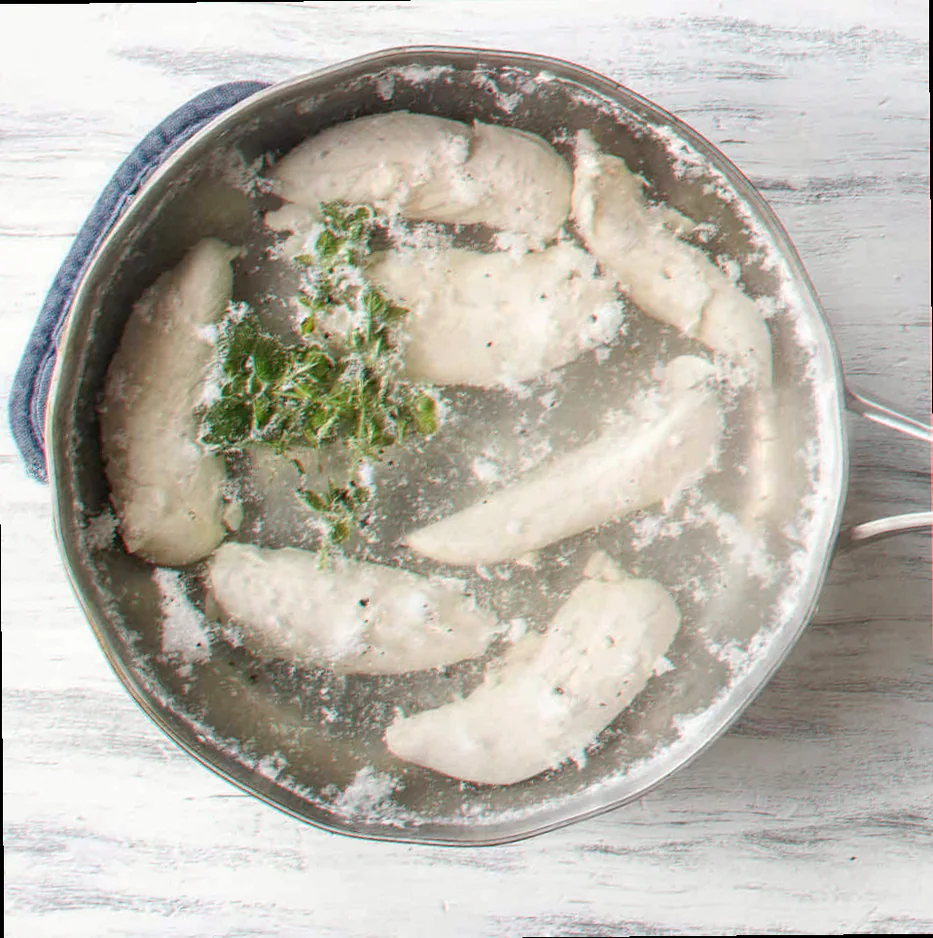
The aroma of gently simmering chicken, infused with the bright notes of lemon and the subtle warmth of peppercorns, is the promise of perfectly boiled chicken tenderloins. This simple yet foundational technique, rooted in French poaching traditions, delivers incredibly tender, succulent chicken - a blank canvas for countless dishes. Achieving that ideal texture - moist and yielding - hinges on precise timing, controlled temperature, and the quality of your chicken tenderloins, lemon, and peppercorns.
Quick Reference
| Field | Detail |
|---|---|
| Dish | Boiled Chicken Tenderloins |
| Origin | French Cuisine |
| Hero ingredients | Chicken Tenderloins, Lemon, Peppercorns |
| Defining technique | Poaching |
| Texture | Moist, Yielding |
| Flavour | Delicate, Bright, Savoury |
| Total time | 20 minutes |
| Servings | 4 |
| Pairs with | Sauvignon Blanc |
| Occasion | Weeknight Dinner, Salad Component, Appetizer |
Ingredients - What Actually Matters and Why
Chicken tenderloins are the star, providing a lean protein base that benefits immensely from gentle cooking. Lemon brightens the flavour profile and helps keep the chicken incredibly moist. Finally, peppercorns add a subtle spice and aromatic complexity that elevates the entire dish.
- Chicken Tenderloins - 500g, trimmed - These provide the lean protein and benefit from the gentle cooking method.
- Lemon - 1, halved - Its acidity tenderizes the chicken and adds a bright, fresh flavour.
- Peppercorns - 1 tablespoon, whole black - These infuse the poaching liquid with a subtle spice and aromatic depth.
- Water - 1.5 litres
- Salt - 1 teaspoon
- Bay Leaf - 1
- Fresh Parsley - 2 sprigs
Method: Poaching Step by Step
This method prioritizes gentle heat and controlled simmering to ensure the chicken remains incredibly tender and doesn't become tough. The sequence of adding ingredients builds flavour gradually and prevents the chicken from sticking.
- Combine - the water, salt, lemon halves, peppercorns, bay leaf, and parsley sprigs in a large saucepan.
- Bring - the liquid to a gentle simmer over medium heat - around 85°C - you should see small bubbles rising, not a rolling boil.
- Submerge - the chicken tenderloins carefully into the simmering liquid, ensuring they are fully covered.
- Poach - the chicken for 5-7 minutes, depending on thickness. The chicken will turn opaque and firm to the touch. A visual cue is when the internal temperature reaches 74°C.
- Rest - the chicken in the poaching liquid for 2-3 minutes after removing from the heat. This allows the juices to redistribute, resulting in a more succulent final product.
- Finish and plate: Gently remove the chicken tenderloins from the poaching liquid and pat dry. They should be a pale, delicate colour, glistening with moisture, and ready to be served. Garnish with a sprig of fresh parsley.
Authentic vs Adapted: What Changes and What Doesn't
Traditional French poaching, or pochage, often involves more elaborate flavourings - mirepoix, bouquet garni, and white wine. It's frequently used for larger cuts of poultry, like whole chicken breasts. This recipe is an adaptation, streamlining the process for the convenience of weeknight cooking while retaining the core principle of gentle, submerged cooking. The non-negotiable elements are the low temperature, the fully submerged chicken, and the use of aromatics to infuse flavour. Deviating from these fundamentally alters the texture and flavour profile, moving away from the delicate, moist result that defines properly poached chicken.
Substitutions That Work (and Ones That Don't)
- Peppercorns → Red Pepper Flakes: Adds heat instead of aromatic spice; acceptable for a different flavour profile.
- Lemon → Lime: A similar citrus flavour, but slightly more tart; a good substitute, but the flavour will be noticeably different.
- For dietary needs - Gluten-Free: This recipe is naturally gluten-free.
- For dietary needs - Dairy-Free: This recipe is naturally dairy-free.
- Budget swap: Using chicken thighs instead of tenderloins will work, but requires a longer poaching time (15-20 minutes) and will result in a richer, less delicate flavour.
What to Serve Alongside Boiled Chicken Tenderloins
Boiled chicken tenderloins are incredibly versatile. They pair beautifully with a vibrant Niçoise salad, providing a lean protein component. Alternatively, serve them with a light and refreshing cucumber and dill salad. For a heartier meal, consider roasted asparagus. To complement the delicate flavour of the chicken, a crisp Sauvignon Blanc is an excellent choice. Its herbaceous notes and bright acidity cut through the richness of the chicken and enhance the lemon flavour.
Troubleshooting: Why Your Boiled Chicken Went Wrong
Achieving perfectly poached chicken requires attention to detail. Here are some common pitfalls and how to avoid them:
- Symptom: Chicken is tough and rubbery. Cause: Overcooking or poaching at too high a temperature. Fix: Reduce the poaching time and ensure the liquid remains at a gentle simmer, not a boil.
- Symptom: Chicken is bland and lacks flavour. Cause: Insufficient seasoning or aromatics in the poaching liquid. Fix: Increase the amount of salt, peppercorns, and lemon, or add additional herbs like thyme or rosemary.
- Symptom: Chicken is dry and stringy. Cause: Not enough liquid covering the chicken or removing it from the liquid before resting. Fix: Ensure the chicken is fully submerged and allow it to rest in the poaching liquid for at least 2-3 minutes after cooking.
Make-Ahead and Storage
You can poach the chicken up to 24 hours in advance. Once cooled, store it submerged in the poaching liquid in an airtight container in the refrigerator. To reheat, gently warm the chicken in the poaching liquid over low heat - avoid boiling. This will help retain its moisture. Reheating is best done just before serving to maintain the yielding texture.
Recipe Questions Answered
What makes boiled chicken tenderloins different from grilled chicken tenderloins?
The primary difference lies in the cooking technique. Grilling imparts a smoky, charred flavour and a slightly firmer texture due to the high heat. Boiling, or poaching, results in a delicate, moist texture and a clean, subtle flavour profile. They are suited to different applications - grilling for bold flavours, poaching for versatility.
Can I make Boiled Chicken Tenderloins without a large saucepan?
While a large saucepan is ideal, you can use a deep skillet. Ensure the chicken is fully submerged in the liquid; you may need to use a smaller quantity of chicken to accommodate the skillet's depth. The texture might be slightly less even due to the reduced liquid volume.
How do I scale Boiled Chicken Tenderloins for a crowd?
You can scale the recipe proportionally, but avoid overcrowding the saucepan. Poach the chicken in batches to maintain a consistent temperature and ensure even cooking. The poaching time remains the same, but you may need to slightly increase it if the liquid temperature drops significantly when adding a large batch of chicken.