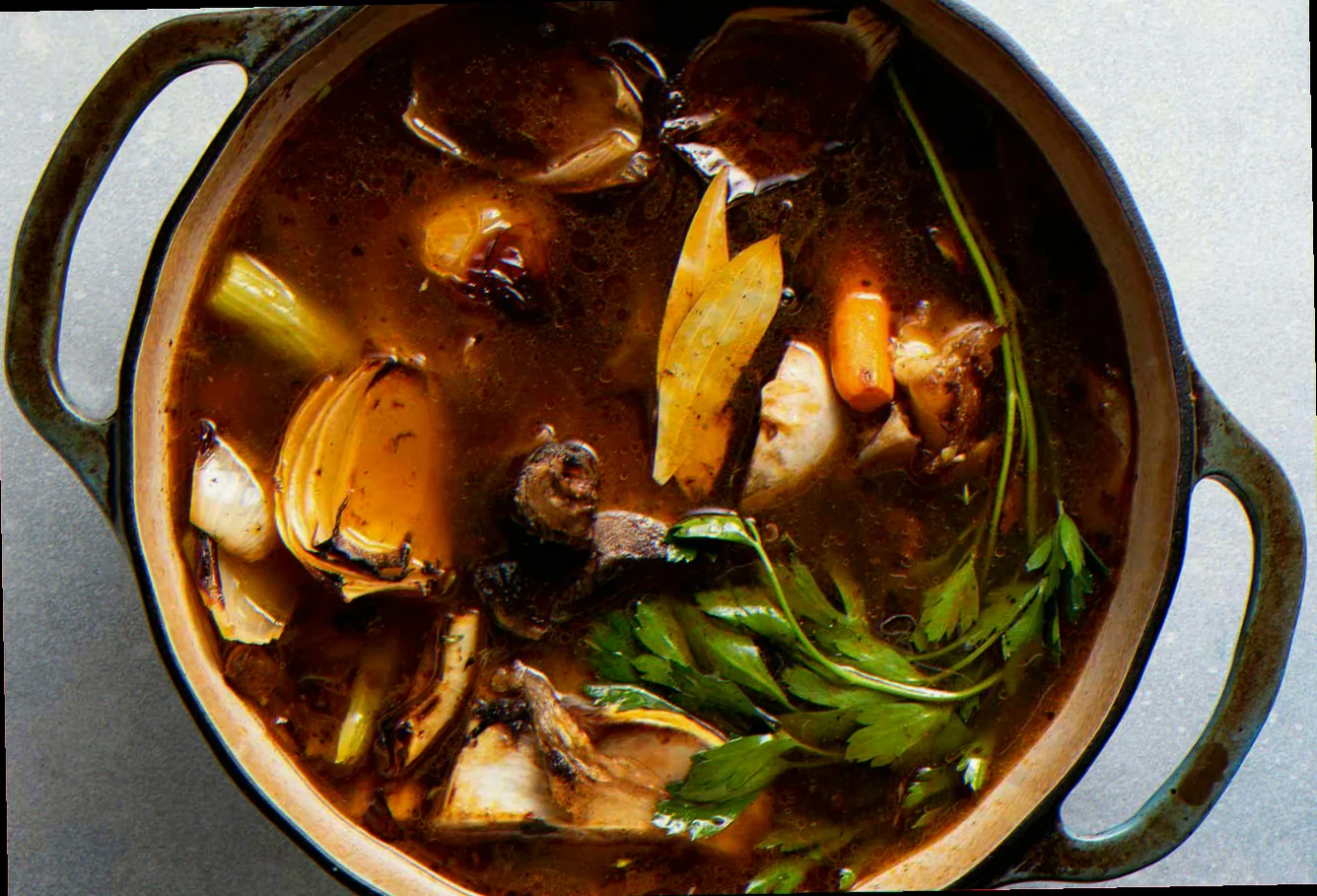
The profound, gelatinous richness of a well-made meat stock is a testament to the slow, deliberate extraction of collagen and other proteins from animal bones. This complex process, often referred to as hydrolyzing collagen, transforms tough connective tissues into luscious gelatin, lending body, mouthfeel, and a foundational umami depth to countless culinary creations. Originating from the humble necessity of utilizing every part of an animal, this cornerstone of classic cuisine, particularly in French gastronomy, unlocks a universe of flavour.
Complete Recipe Overview
| Property | Detail |
|---|---|
| Dish entity | Meat Stock |
| Cuisine origin | French Gastronomy |
| Defining technique | Slow Simmering |
| Hero ingredients | Beef Bones, Mirepoix, Cold Water |
| Critical ratio | Bone to Water Ratio (approx. 1:2 by volume) |
| Prep time | 30 minutes |
| Cook time | 4-12 hours (simmering) at 85-95°C |
| Rest / chill time | Minimum 8 hours (for fat separation) |
| Yield | Approx. 2-3 litres |
| Difficulty | Easy - requires patience and minimal active intervention. |
Ingredients: Quantities, Roles, and Critical Ratios
The construction of a superior meat stock hinges on the harmonious interaction of its core components: bones for structure and flavour, aromatics for nuance, and water as the solvent for extraction. The critical ratio of approximately 1 part bones to 2 parts water (by volume, though often measured by weight for precision) is paramount. Too little water results in an overly concentrated, potentially bitter stock, while too much dilutes the precious extracted compounds, yielding a thin, watery liquid. This ratio ensures optimal extraction without compromising flavour intensity.
- Beef Bones (Marrow and Knuckle Bones) - 2000 g - Role: The primary source of collagen and marrow, which hydrolyze into gelatin, providing body and richness. Knuckle bones contribute minerals and a clean flavour.
- Mirepoix (Carrots, Celery, Onions) - 500 g total (250g onions, 150g carrots, 100g celery) - Role: To impart aromatic depth and a subtle sweetness. Onions provide the foundational sweetness and colour, carrots add a touch of sweetness and colour, and celery contributes a fresh, vegetal note.
- Cold Water - 4000 ml - Role: The solvent for extraction. Cold water is crucial for initiating a slow, gentle extraction, preventing the rapid release of impurities that can lead to cloudiness.
- Herbs (Thyme sprigs, Parsley stems, Bay leaf) - 2-3 sprigs each, 1 bay leaf - Role: To add subtle herbaceous complexity without overpowering the meat flavour.
- Black Peppercorns - 1 tablespoon - Role: To provide a mild, warm spice note.
- Optional: Roasted Chicken Carcass or Trimmings - 500 g - Role: Adds another layer of flavour complexity and depth, especially if making beef and chicken stock.
The Science of Collagen Hydrolysis
The magic of meat stock lies in the transformation of collagen, a fibrous protein abundant in connective tissues, cartilage, and bones. When subjected to prolonged, low-temperature cooking (simmering around 85-95°C), the triple-helix structure of collagen begins to unwind. This process, known as hydrolysis, breaks down the long protein chains into shorter, water-soluble peptides and amino acids. The most significant product of this hydrolysis is gelatin. Gelatin, when cooled, forms a gel, giving the stock its characteristic body and mouthfeel. It also contributes to the rich, savory flavour profile through the release of glutamic acid, a key component of umami. Insufficient cooking time or excessively high temperatures can prevent complete hydrolysis, leading to a stock lacking viscosity and depth.
Method: Slow Simmering at Every Critical Stage
The method for creating exemplary meat stock is optimized for gradual, complete extraction of flavour and gelatin from bones and aromatics.
- Roast - Bones and Mirepoix: Preheat oven to 220°C. Spread beef bones and chopped mirepoix (cut into roughly 2.5 cm pieces) on a large baking sheet. Roast for 45-60 minutes, turning halfway through, until well-browned. This browning is critical for developing deep flavour through the Maillard reaction.
- Deglaze - Flavor Foundation: Transfer the roasted bones and vegetables to a large stockpot. Add about 250 ml of water and scrape the bottom of the baking sheet with a wooden spoon to loosen any browned bits. Add this flavorful liquid to the stockpot.
- Submerge - Gentle Extraction: Add the remaining cold water to the stockpot, ensuring the bones and vegetables are fully submerged.
- Initiate - Slow Simmer: Place the stockpot over medium-high heat and bring it just to a simmer. Immediately reduce the heat to low, so that the liquid is barely trembling, with only a few bubbles rising to the surface. This is a critical control point: boiling will emulsify impurities and fat, resulting in a cloudy, less refined stock. Maintain this gentle simmer.
- Skim - Purity of Flavor: For the first 1-2 hours of simmering, diligently skim off any foam or impurities that rise to the surface using a fine-mesh sieve or ladle. This is the second critical control point: failure to skim will incorporate undesirable flavours and cloudiness into the final stock.
- Infuse - Aromatic Nuance: Add the herb bouquet (thyme, parsley stems, bay leaf) and peppercorns during the last hour of simmering.
- Simmer - Extended Extraction: Continue to simmer for a minimum of 4 hours, and up to 12 hours for a more intense flavour and gelatinous result. The longer the simmer, the more flavour and body are extracted.
- Strain - Refinement: Carefully ladle the stock through a fine-mesh sieve lined with cheesecloth into a clean container. Discard the solids.
- Cool - Fat Separation: Allow the stock to cool at room temperature for about 1 hour, then transfer it to the refrigerator. Chill for at least 8 hours, or preferably overnight. This allows the fat to solidify on the surface, making it easy to remove and yielding a cleaner, less greasy stock.
- Portion and Store: Once chilled and the fat is removed, portion the stock into airtight containers or freezer bags.
Cultural and Historical Context of French Gastronomy
The meticulous preparation of meat stock, or "fond de cuisine," is a cornerstone of French culinary tradition, dating back centuries. Historically, in French kitchens, particularly in the classical era of Escoffier, stock was not merely an ingredient but the very foundation upon which an entire repertoire of sauces and dishes was built. It represented an economical and resourceful approach, utilizing every part of the animal to create depth and complexity. This focus on a foundational stock elevated French cuisine to its esteemed position, emphasizing technique and ingredient quality as paramount.
Variations Across European Cuisines
- Italian Brodo: Italian "brodo" often features a lighter preparation, frequently using a mix of beef, chicken, and vegetables, sometimes including a small piece of Parmesan rind for added umami. The simmering time can be shorter, focusing on a clear, fragrant broth rather than a deeply gelatinous stock.
- Eastern European "Bulion": In many Eastern European countries, "bulion" is a staple, often made with chicken or beef bones and vegetables. It is typically simmered for a shorter period than French stock and is often served as a clear soup with noodles or dumplings, emphasizing a comforting, restorative quality.
- Vegetarian Stock: A vegan adaptation replaces animal bones with a larger quantity and variety of vegetables (e.g., mushrooms, leek greens, parsnips) and often includes nutritional yeast or dried mushrooms for umami. The gelatinous quality is lost, but a flavourful aromatic liquid is achieved.
- Modern "Bone Broth" Trend: Contemporary "bone broth" often emphasizes longer simmering times (24+ hours) and specific types of bones (e.g., pre-roasted, grass-fed) with the purported health benefits of collagen and minerals. While similar in technique, the emphasis shifts towards perceived wellness attributes.
Storage, Freezing, and Reheating Meat Stock
Proper storage ensures the quality and longevity of your hard-earned meat stock. At room temperature, cooled stock should not be left out for more than 2 hours. In the refrigerator, airtight containers will preserve the stock for 3-4 days. For longer storage, freezing is ideal. Portion the stock into freezer-safe containers or ice cube trays (for small portions). Frozen stock will maintain excellent quality for 6-12 months. To reheat, gently warm the stock in a saucepan over medium-low heat until it reaches your desired temperature, typically around 70-80°C for use in sauces or soups. Avoid vigorous boiling when reheating to maintain clarity.
Pairing Meat Stock: Sides, Sauces, and Drinks
Meat stock is the silent hero that elevates countless dishes. It forms the base for classic French sauces like demi-glace and Bordelaise, providing unparalleled depth. When served as a consommé, it pairs beautifully with delicate garnishes like finely diced vegetables or small pasta shapes. For a hearty meal, a robust beef stock can be the foundation for a rich stew or a classic French onion soup. For a beverage pairing, a medium-bodied red wine with good acidity, such as a Pinot Noir or a Burgundy, complements the richness of beef stock without overwhelming it. For non-alcoholic options, sparkling water with a squeeze of lemon can cleanse the palate, or a simple herbal tea can offer a subtle counterpoint.
Answers to the Most-Searched Questions About Meat Stock
What temperature should meat stock be cooked at - and how do I know it's done?
Meat stock should be cooked at a gentle simmer, between 85°C and 95°C. You know it's done when the liquid has reduced slightly, the flavour is concentrated, and upon cooling, it has a noticeable gelatinous quality. The longer the simmer (up to 12 hours), the more pronounced this gelatinous texture will be.
What is the difference between meat stock and broth?
While often used interchangeably, there are key differences. Meat stock primarily uses bones, which are simmered for extended periods (4-12+ hours) to extract collagen and gelatin, resulting in a richer, more viscous texture and a deeper flavour. Broth, on the other hand, typically uses meat with some bones and is simmered for a shorter duration (1-3 hours), yielding a lighter, more flavourful liquid that is often served as a soup base. Stock is the foundation, broth is often the finished product.
Can meat stock be made in advance, and does it freeze well?
Yes, meat stock can absolutely be made in advance. It is best prepared ahead of time to allow for proper cooling and fat separation. It freezes exceptionally well, retaining its quality for 6-12 months when stored in airtight, freezer-safe containers. Freezing is the recommended method for long-term storage.