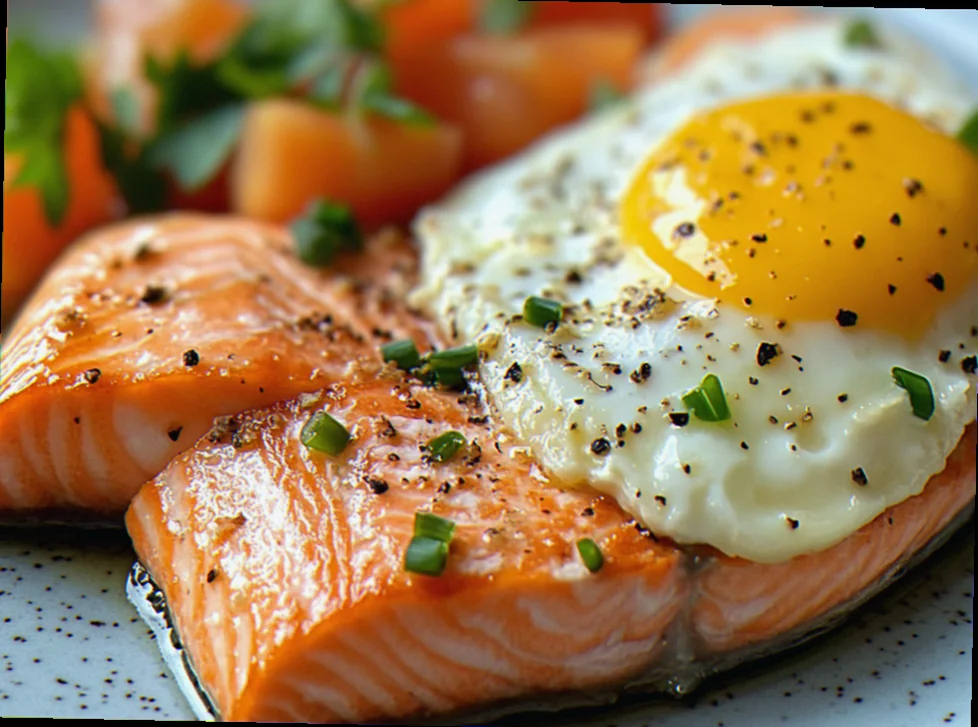
The beauty of a truly exceptional salmon breakfast lies in the harmonious interplay of contrasting textures and vibrant flavours: the crispy skin and moist, flaky flesh of pan-seared salmon, brightened by the tangy, herbaceous notes of a dill crème fraîche, and complemented by tender-crisp asparagus. This version elevates the classic salmon breakfast from simple protein to a sophisticated, yet entirely achievable, morning indulgence, making it a perfect anchor for any special brunch or a healthy, fortifying start to a weekday.
Recipe Overview
| Detail | Value |
|---|---|
| Dish | Pan-Seared Salmon with Dill Crème Fraîche and Asparagus |
| Cuisine / category | Modern American Breakfast / Brunch / Seafood |
| Prep time | 15 minutes |
| Cook time | 15 minutes |
| Total time | 30 minutes |
| Servings | 2 |
| Difficulty | Easy to Medium |
| Key technique | Pan-searing for crispy skin and tender flesh |
| Flavour profile | Umami, Tangy, Herbaceous, Rich |
| Best served | Weekend Brunch, Special Occasion Breakfast, Healthy Weekday Start |
Ingredients
This curated ingredient list is designed to deliver a balanced dish, focusing on the umami depth of the salmon, the delicate crunch of fresh asparagus, and the bright, creamy tang of the dill crème fraîche. Each component plays a vital role in creating a cohesive flavour and texture profile.
- For the Salmon:
- 2 (180g each) skin-on salmon fillets, about 2.5 cm thick
- 15 ml (1 tablespoon) olive oil
- 15 ml (1 tablespoon) unsalted butter
- 3 g (1/2 teaspoon) sea salt
- 2 g (1/4 teaspoon) freshly ground black pepper
- For the Dill Crème Fraîche:
- 120 ml (1/2 cup) crème fraîche
- 15 ml (1 tablespoon) fresh lemon juice
- 5 g (2 tablespoons) fresh dill, finely chopped
- 2 g (1 teaspoon) capers, drained and roughly chopped
- 1 g (1/4 teaspoon) sea salt
- 0.5 g (pinch) freshly ground black pepper
- For the Asparagus:
- 250 g (1 bunch) thin asparagus spears, woody ends trimmed
- 5 ml (1 teaspoon) olive oil
- 1 g (1/4 teaspoon) sea salt
- 0.5 g (pinch) freshly ground black pepper
Step-by-Step Method
The method prioritises building flavour and achieving optimal texture for each component, starting with the sauce for flavour development, then cooking the vegetables to crisp-tender perfection, and finally searing the salmon to ensure a beautifully crispy skin and moist interior.
- Step 1 - Prepare the Dill Crème Fraîche: In a small bowl, combine 120 ml crème fraîche, 15 ml fresh lemon juice, 5 g finely chopped fresh dill, 2 g chopped capers, 1 g sea salt, and 0.5 g black pepper. Whisk gently until well combined and creamy. Taste and adjust seasoning if needed. The sauce should be tangy and herbaceous. Set aside to allow flavours to meld.
- Step 2 - Prepare and Cook the Asparagus: Rinse 250 g asparagus spears and snap off the woody ends. In a medium skillet or pan, heat 5 ml olive oil over medium heat. Add the asparagus, 1 g sea salt, and 0.5 g black pepper. Sauté for 3-5 minutes, tossing occasionally, until the asparagus is bright green and tender-crisp, retaining a slight bite. Remove from pan and set aside.
- Step 3 - Prepare the Salmon: Pat the 2 salmon fillets thoroughly dry with paper towels. This is crucial for achieving crispy skin. Season the skin side generously with 3 g sea salt and 2 g black pepper. Lightly season the flesh side.
- Step 4 - Pan-Sear the Salmon: Heat a heavy-bottomed skillet (cast iron or stainless steel works best) over medium-high heat. Add 15 ml olive oil. Once the oil shimmers and just begins to smoke lightly, carefully place the salmon fillets, skin-side down, into the hot pan. Press down gently on each fillet for the first 30 seconds with a spatula to ensure full contact with the pan, promoting even crisping.
- Step 5 - Cook and Finish the Salmon: Reduce heat to medium. Cook skin-side down for 5-7 minutes, or until the skin is deeply golden brown and crispy, and the flesh has cooked about two-thirds of the way up the side of the fillet (you'll see the colour change). Add 15 ml unsalted butter to the pan. Flip the salmon fillets and cook for another 2-3 minutes, basting with the melted butter, until the internal temperature reaches 63°C when measured with an instant-read thermometer at the thickest part. The flesh should flake easily with a fork but still be moist.
- Final step - Plate and Serve: Carefully transfer the pan-seared salmon fillets and sautéed asparagus to individual serving plates. Spoon a generous dollop of the dill crème fraîche alongside or on top of each salmon fillet. Serve immediately, perhaps with a wedge of fresh lemon for an extra bright finish.
The Science Behind Pan-Seared Salmon
Achieving perfectly pan-seared salmon hinges on two key culinary principles: moisture management and the Maillard reaction. By thoroughly patting the salmon skin dry before cooking, we remove surface moisture, preventing the skin from steaming and allowing it to directly contact the hot pan. This direct contact, combined with the medium-high heat, initiates the Maillard reaction-a complex chemical process between amino acids and reducing sugars. This reaction is responsible for the coveted deep golden-brown colour, intricate savoury flavours, and irresistible crispy texture of the salmon skin. Cooking skin-side down for the majority of the time also helps to render out the fat, which in turn crisps the skin further and insulates the delicate flesh, allowing it to cook gently and remain moist and flaky. The addition of butter towards the end of cooking not only adds richness but also aids in basting, contributing to an even cook and a delicious browned butter flavour that permeates the fish.
Ingredient Substitutions and Variations
Adaptability is key in the kitchen, and this salmon breakfast recipe is quite forgiving, allowing for several thoughtful substitutions without compromising the overall integrity of the dish.
- Crème fraîche → Full-fat Greek Yogurt: Greek yogurt offers a similar creamy texture and tangy profile to crème fraîche, making it an excellent substitute. It will result in a slightly lighter, tangier sauce but works very well. Ensure it's full-fat for the best texture and to prevent curdling.
- Asparagus → Green Beans or Broccolini: If asparagus is out of season or unavailable, thin green beans or broccolini can be prepared in the same manner - sautéed until tender-crisp. The flavour profile will shift slightly, but both offer a complementary green vegetable component.
- Dietary variation - Dairy-Free: For a dairy-free option, substitute the crème fraîche with a cashew-based cream or a high-quality dairy-free sour cream alternative. For the butter, use a plant-based butter substitute or simply increase the olive oil quantity slightly for searing.
- Flavour variation - Spicier Kick: To introduce a spicier note, finely mince a small amount of fresh jalapeño or a pinch of red pepper flakes into the dill crème fraîche. Alternatively, a drizzle of chili oil over the finished dish adds both heat and a vibrant red hue.
Make-Ahead, Storage, and Reheating
While best enjoyed fresh, certain components of this dish can be prepared in advance to streamline your morning routine.
- Make-Ahead: The dill crème fraîche can be prepared up to 2 days in advance. Store it in an airtight container in the refrigerator at 4°C. The flavours will deepen overnight. The asparagus can be trimmed a day ahead and stored in the refrigerator.
- Storage: Cooked salmon and asparagus should be stored separately in airtight containers in the refrigerator at 4°C for up to 2-3 days. The crème fraîche should also be stored separately.
- Reheating: To reheat the salmon without losing its delicate texture, gently warm it in an oven preheated to 120°C for about 10-15 minutes, or until just warmed through. Avoid high heat, which can dry out the fish. Reheat asparagus in a dry skillet over medium heat for 2-3 minutes until warm. The crème fraîche should be served chilled or at room temperature.
What to Serve With Pan-Seared Salmon with Dill Crème Fraîche and Asparagus
This salmon dish is versatile and pairs wonderfully with several breakfast and brunch companions, creating a truly satisfying meal for a Weekend Brunch or a Special Occasion Breakfast.
- Poached Eggs and Sourdough Toast: The runny yolk of a perfectly poached egg adds another layer of richness, while a slice of toasted sourdough provides a crisp counterpoint and is excellent for soaking up any lingering sauce. This combination transforms the dish into a more substantial brunch experience.
- Roasted Cherry Tomatoes: Halved cherry tomatoes roasted with a drizzle of olive oil and a pinch of salt until slightly burst and sweet provide a juicy, vibrant acidic burst that cuts through the richness of the salmon and crème fraîche beautifully. They add a fresh, sweet-tart element that brightens the entire plate.
- Crispy Roasted Potatoes: For a heartier meal, particularly for a holiday breakfast, serve with small, crispy roasted potatoes seasoned with rosemary and garlic. Their earthy, starchy quality perfectly complements the rich salmon and tangy sauce.
Common Mistakes and How to Avoid Them
- Mistake 1: Not Patting the Salmon Dry: If the salmon skin is moist, it will steam rather than crisp, resulting in a rubbery texture. Always pat the fillets thoroughly dry with paper towels before seasoning.
- Mistake 2: Overcrowding the Pan: Placing too many fillets in the pan at once lowers the pan's temperature significantly, leading to steaming instead of searing. Cook salmon in batches if necessary, ensuring each fillet has enough space to achieve that desirable crispy skin.
- Mistake 3: Overcooking the Salmon: Salmon cooks quickly and can become dry and tough if overcooked. The ideal internal temperature for salmon is 63°C (medium-rare to medium). Use an instant-read thermometer inserted into the thickest part of the fillet. The visual cue is when the flesh just begins to flake, but still appears moist and slightly translucent in the very center.
Frequently Asked Questions
Can I make Pan-Seared Salmon with Dill Crème Fraîche ahead of time?
While the salmon is best served immediately after cooking for optimal crispy skin and moist flesh, the dill crème fraîche can be prepared up to 2 days in advance and stored in an airtight container in the refrigerator at 4°C. The asparagus can also be trimmed and stored a day ahead. For a make-ahead strategy, prepare the sauce and asparagus, and then quickly pan-sear the salmon just before serving.
How do I know when Salmon is cooked properly?
Properly cooked salmon will have an internal temperature of 63°C when measured at the thickest part of the fillet with an instant-read thermometer. Visually, the flesh will change from translucent to opaque, and it should flake easily with a fork but still appear moist. The skin should be deeply golden and crispy.