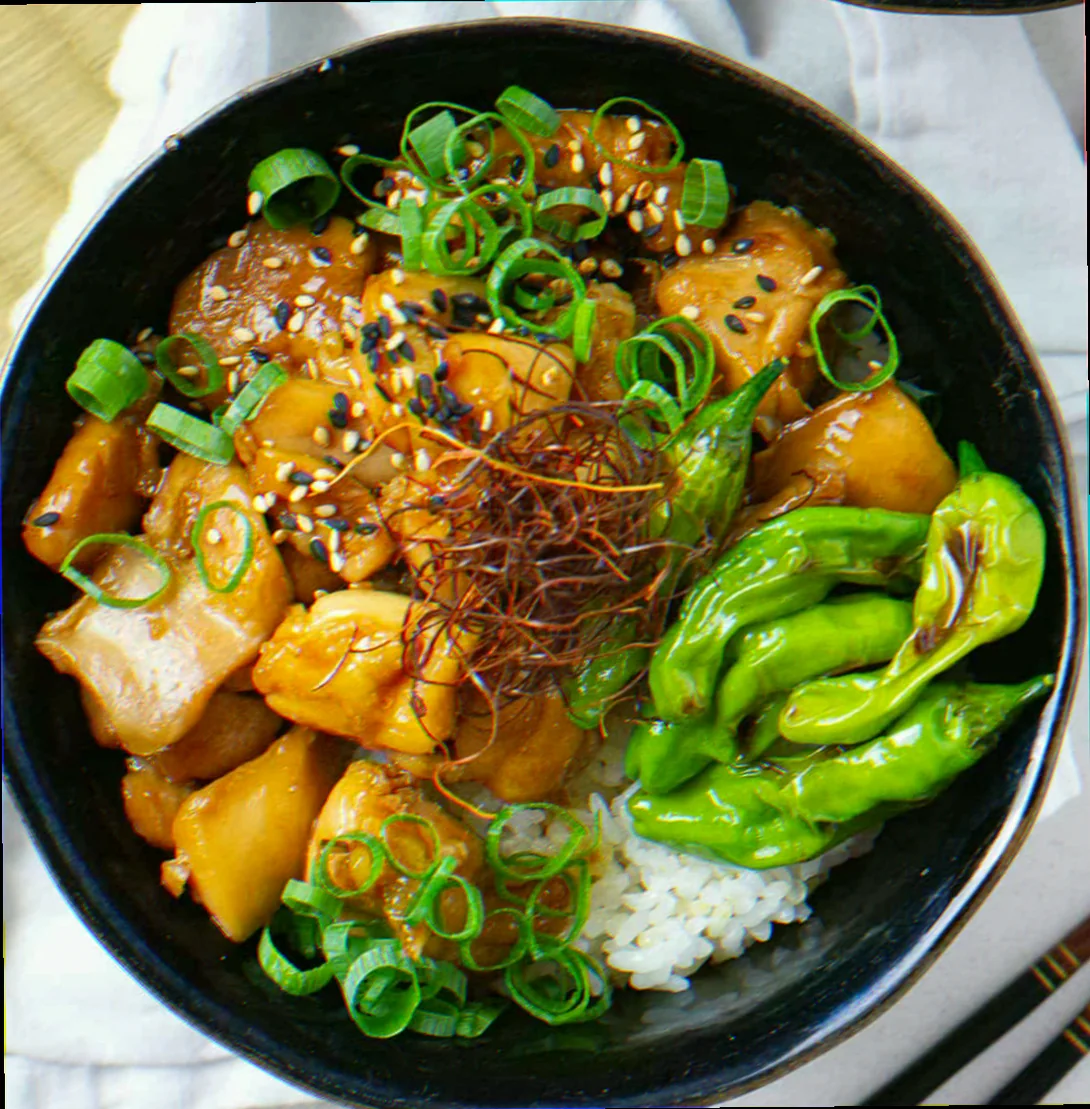
The humble donburi, a cornerstone of Japanese comfort food, achieves its profound satisfaction through a masterful interplay of starch gelatinisation in perfectly cooked rice and the complex umami synergy of its savory topping. At its core, donburi is a Japanese "rice bowl" dish, where a warm, usually protein-rich, topping is gently simmered in a dashi-based sauce before being served over freshly steamed rice. This creates a symphony of textures and flavors, from the resilient chew of the rice to the tender succulence of the topping, all bound by an irresistible savory-sweet glaze.
Complete Recipe Overview
| Property | Detail |
|---|---|
| Dish entity | Donburi (Oyakodon style) |
| Cuisine origin | Japanese cuisine, Japan |
| Defining technique | Simmering protein and aromatics in a dashi-based sauce |
| Hero ingredients | Japanese short-grain rice, Chicken thigh, Dashi-based sauce |
| Critical ratio | 1:1:1 ratio of Dashi:Soy Sauce:Mirin in the sauce, balanced with protein and rice to prevent sogginess. |
| Prep time | 20 minutes |
| Cook time | 30 minutes (20 minutes for rice, 10 minutes for topping) |
| Rest / chill time | 10 minutes for rice |
| Yield | 2 servings |
| Difficulty | Medium - achieving perfect rice and a tender, moist topping requires attention to detail. |
Ingredients: Quantities, Roles, and Critical Ratios
The structural logic of donburi relies on three pillars: perfectly cooked, slightly sticky Japanese rice, a protein-rich topping, and a balanced savory-sweet sauce (tare) that ties everything together. The critical ratio for the sauce itself is often a 1:1:1 or 4:1:1 blend of dashi, soy sauce, and mirin (sake can replace some mirin), ensuring a harmonious balance of umami, salinity, and sweetness. This ratio is crucial for building the dish's signature flavor profile without overpowering the delicate ingredients.
- Japanese Short-Grain Rice - 200 g (uncooked) - Role: Provides the textural foundation and neutral canvas; its stickiness is essential for picking up the topping.
- Boneless, Skinless Chicken Thigh - 200 g - Role: Primary protein, delivering richness and tenderness when cooked correctly.
- Large Eggs - 2 units - Role: Adds creamy texture and richness, forming a soft, custardy layer that binds the topping.
- Yellow Onion - 60 g (½ medium onion), thinly sliced - Role: Contributes sweetness and aromatic depth to the topping.
- Dashi Stock - 120 ml - Role: The umami-rich base for the sauce, providing foundational savory flavor.
- Soy Sauce - 40 ml - Role: Provides salinity, umami, and a deep savory note.
- Mirin - 40 ml - Role: Adds sweetness, a glossy sheen, and a subtle alcoholic complexity.
- Granulated Sugar - 5 g (1 tsp) - Role: Enhances sweetness and aids in caramelization.
- Green Onion (Scallion) - 10 g, thinly sliced for garnish - Role: Fresh aroma and visual appeal.
- Shichimi Togarashi (optional) - Pinch, for garnish - Role: Adds a touch of heat and complex spice.
The Science of Starch Gelatinisation and Umami Synergy
The success of any donburi begins with its foundation: the rice. Japanese short-grain rice, like Koshihikari, is rich in amylopectin, a branched starch molecule. When this rice is cooked using the absorption method, the starch granules undergo a process called gelatinisation. As heat and water penetrate the rice kernel, the starch molecules absorb water, swell, and eventually rupture, releasing amylose and amylopectin into the surrounding water. This process transforms the hard, opaque grains into soft, translucent, and slightly sticky rice. The stickiness is crucial for donburi, as it allows the rice to hold its shape in the bowl and easily pick up the flavorful topping, creating a cohesive bite. Overcooking or insufficient water can lead to mushy or hard rice, respectively, compromising the entire dish.
Equally critical is the flavor profile of the dashi-based sauce, which exemplifies umami synergy. Dashi, typically made from kombu (kelp) and katsuobushi (dried bonito flakes), is rich in naturally occurring glutamates (from kombu's glutamic acid) and inosinates (from katsuobushi's inosinic acid). When these two compounds are present together, they create a synergistic effect, enhancing the perception of umami several-fold compared to either compound alone. The addition of soy sauce (more glutamates), mirin (sweetness and amino acids from fermentation), and protein-rich chicken further amplifies this umami depth, creating a profoundly savory and satisfying experience that defines donburi.
Method: Simmering the Topping at Every Critical Stage
This method is optimized for achieving tender chicken, perfectly cooked eggs, and a well-balanced sauce that moistens the rice without making it soggy.
- Rinse & Cook - Japanese Rice: Rinse 200 g of Japanese short-grain rice under cold running water until the water runs clear. Combine the rinsed rice with 220 ml of cold water in a heavy-bottomed pot. Bring to a boil over high heat, then immediately reduce heat to the lowest setting, cover tightly, and simmer for 15 minutes.
- Rest - Cooked Rice: Remove the pot from heat and let it rest, covered, for 10 minutes. Do not lift the lid. This allows the steam to redistribute moisture, resulting in plump, evenly cooked grains.
- Prep - Chicken and Onion: While the rice rests, slice 200 g boneless, skinless chicken thigh into 1.5 cm bite-sized pieces. Thinly slice 60 g yellow onion. Whisk 2 large eggs lightly; do not over-whisk, as you want distinct whites and yolks for texture.
- Simmer - Sauce and Onion: In a small non-stick skillet (or donburi pan) measuring about 18-20 cm in diameter, combine 120 ml dashi stock, 40 ml soy sauce, 40 ml mirin, and 5 g granulated sugar. Bring to a gentle simmer over medium heat. Add the sliced onion and cook for 2-3 minutes until softened.
- Add - Chicken: Add the chicken pieces to the simmering sauce. Arrange them in a single layer if possible. Continue to simmer for 3-4 minutes, or until the chicken is mostly cooked through and no longer pink. The sauce should be gently bubbling, not boiling vigorously.
- Critical Control Point 1 - Chicken Doneness: Watch for the chicken to turn opaque throughout. Overcooking will make the chicken tough and dry, losing its succulence. If you see white foam, skim it off. The chicken should be just cooked through.
- Pour - Eggs: Gently pour the lightly whisked eggs evenly over the chicken and onion. Do not stir. Cover the skillet immediately with a lid and cook for 1-2 minutes over medium-low heat.
- Critical Control Point 2 - Egg Texture: The most common failure point is overcooking the eggs, leading to a firm, rubbery texture instead of a soft, custardy finish. Cook until the egg whites are just set but the yolks are still slightly runny or very soft. The residual heat will continue to cook them slightly after removal.
- Rest / Set - Egg Topping: Once the eggs are just set to your liking, remove the skillet from heat. Let it rest for 30 seconds to allow the steam to finish cooking the egg and for the flavors to meld.
- Plate and serve: Fluff the cooked rice with a paddle and divide it into two deep donburi bowls. Carefully slide the entire chicken and egg topping from the skillet onto one half of each rice bowl, ensuring some of the savory sauce drizzles over the rice. Garnish with thinly sliced green onion and a pinch of shichimi togarashi, if desired. Serve immediately while hot.
Cultural and Historical Context of Japanese Donburi
The donburi, literally meaning "bowl" in Japanese, traces its origins to the Edo period (1603-1868) in Japan. Initially, it referred to a large, deep ceramic bowl, but over time, the name became synonymous with the dish itself: a bowl of steamed rice topped with various ingredients. Its convenience and satisfying nature made it popular among workers and travelers, offering a complete meal in a single vessel. The concept evolved from simple "fukagawa-meshi" (clams cooked in miso, served over rice) to a multitude of regional and ingredient-specific variations that became staples across Japan. Donburi represents the Japanese culinary philosophy of balancing flavors and textures within a cohesive, aesthetically pleasing presentation, even for an everyday meal.
Variations Across Japanese and Global Cuisines
- Katsudon (Japan): This popular variation features a deep-fried pork cutlet (tonkatsu) simmered briefly with egg and onion in the dashi-based sauce before being served over rice. The crisp exterior of the katsu slightly softens, absorbing the savory liquid, creating a unique texture contrast.
- Gyudon (Japan): A classic, featuring thinly sliced beef and onions simmered in a sweeter dashi-soy sauce blend, creating a rich and savory topping. It's often served with pickled ginger (beni shoga) and a raw egg yolk.
- Tendon (Japan): Tempura-donburi, where various tempura (shrimp, vegetables) are drizzled with a sweet soy-based sauce and served over rice. The light, crispy tempura provides a different textural experience.
- Vegan/Vegetarian Adaptation: Replace chicken with pan-fried tofu or tempeh, mushrooms (shiitake, enoki), or thinly sliced root vegetables like daikon or carrots. Use a mushroom-based dashi or kombu dashi for the sauce to maintain umami depth. The egg can be omitted or replaced with a plant-based egg substitute for texture.
- Modern Adaptation: Fusion Donburi: Contemporary interpretations might feature ingredients like avocado, sriracha mayonnaise, or even Western-style proteins like grilled salmon or pulled pork, often incorporating global flavors while retaining the fundamental "bowl over rice" concept. This sacrifices some traditional umami purity for broader flavor appeal.
Storage, Freezing, and Reheating Donburi
Donburi is best enjoyed fresh due to the delicate balance of textures, especially the rice and soft-cooked egg. However, certain components can be stored.