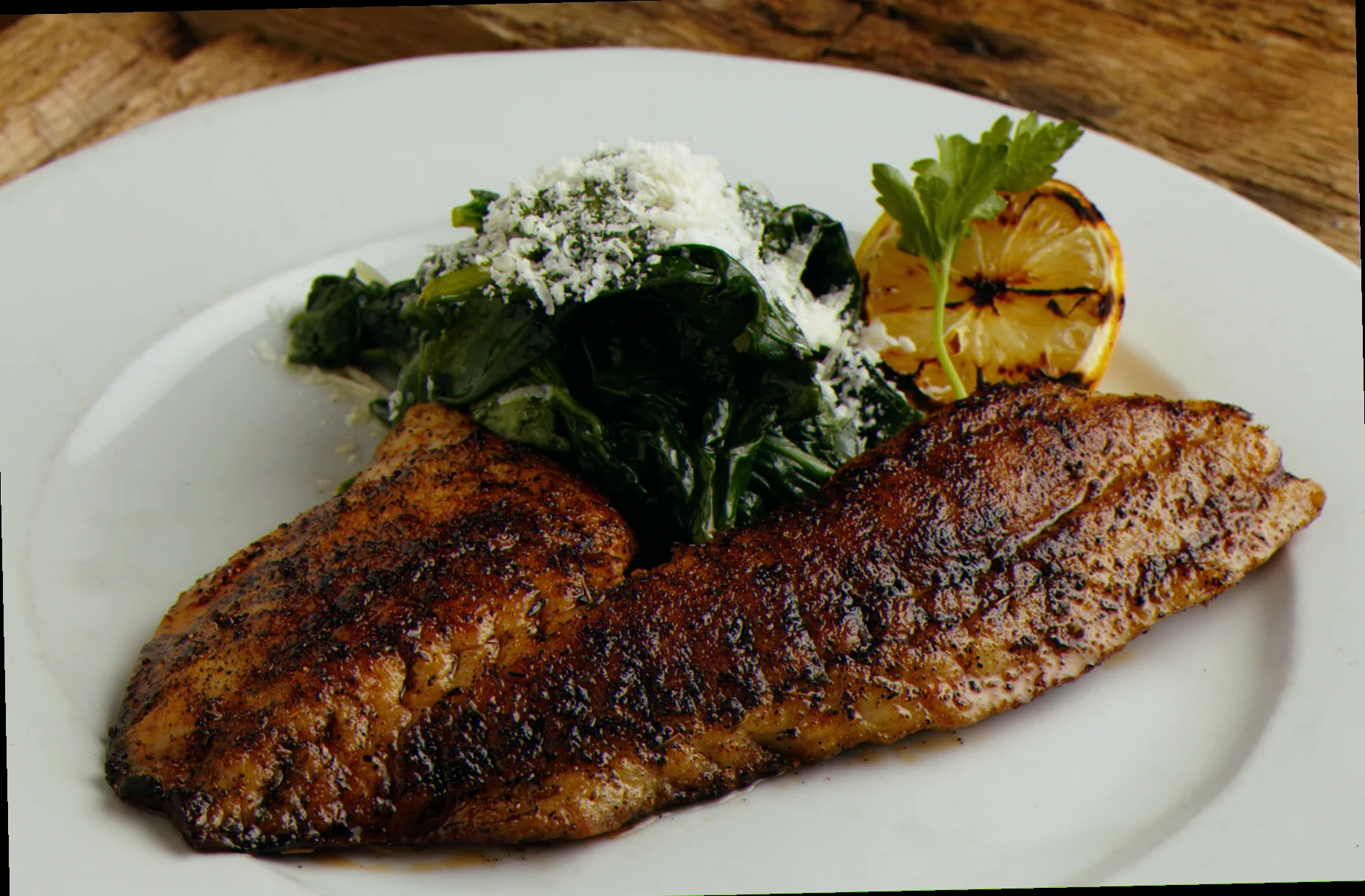
The secret to exceptional pan-seared redfish lies in achieving a perfectly crispy skin and moist, flaky flesh, all brought together by a bright, velvety lemon-dill butter sauce. This recipe elevates the delicate, mild flavor of redfish with a technique that guarantees succulent results, showcasing a harmonious balance of zesty acidity, herbaceous freshness, and rich umami notes that make it a standout seafood dinner.
Recipe Overview
| Detail | Value |
|---|---|
| Dish | Pan-Seared Redfish with Lemon-Dill Butter Sauce |
| Cuisine / category | American Coastal Cuisine / Seafood Dinner |
| Prep time | 15 minutes |
| Cook time | 15-20 minutes |
| Total time | 30-35 minutes |
| Servings | 4 |
| Difficulty | Medium |
| Key technique | Pan-searing and Deglazing |
| Flavour profile | Bright, Zesty, Herbaceous, Rich |
| Best served | Weeknight dinner, Special occasion, Summer entertaining |
Ingredients
This ingredient list is designed to create a vibrant, balanced dish where the freshness of the redfish shines through, complemented by aromatic herbs and a tangy, rich sauce. Fresh dill and lemon are paramount for the bright flavour profile.
- 680 grams (approx. 1.5 lbs) redfish fillets, skin-on, boneless (4 pieces, about 170g each)
- 15 ml (1 tablespoon) olive oil
- 60 grams (4 tablespoons) unsalted butter, divided
- 2 cloves garlic, minced (approx. 10g)
- 1 small shallot, finely diced (approx. 30g)
- 60 ml (1/4 cup) dry white wine (e.g., Sauvignon Blanc or Pinot Grigio)
- 120 ml (1/2 cup) low-sodium chicken broth or fish stock
- 30 ml (2 tablespoons) fresh lemon juice, plus zest from 1/2 lemon
- 15 grams (1/4 cup) fresh dill, finely chopped
- 15 grams (1/4 cup) fresh parsley, finely chopped
- 5 grams (1 teaspoon) smoked paprika
- 5 grams (1 teaspoon) kosher salt, plus more to taste
- 2 grams (1/2 teaspoon) freshly ground black pepper, plus more to taste
Step-by-Step Method
The sequential steps ensure perfectly cooked fish with crispy skin, followed by a quick pan sauce that builds flavour from the fond left in the skillet, culminating in a balanced and elegant dish.
- Step 1 - Prep Fish: Thoroughly pat redfish fillets dry on both sides with paper towels. This is crucial for achieving crispy skin. Season the skin side generously with 3 grams (1/2 teaspoon) kosher salt, 1 gram (1/4 teaspoon) black pepper, and the smoked paprika. Season the flesh side lightly with remaining salt and pepper.
- Step 2 - Sear Fish: Heat a large, heavy-bottomed skillet (preferably cast iron or stainless steel) over medium-high heat for 2-3 minutes until hot. Add olive oil and 15 grams (1 tablespoon) of unsalted butter. Once the butter melts and the oil shimmers, carefully place the redfish fillets skin-side down into the hot pan. Cook for 4-5 minutes without moving, until the skin is deeply golden brown and crispy, and the flesh has turned opaque about two-thirds of the way up the sides. You should hear a continuous sizzling sound.
- Step 3 - Finish Fish: Gently flip the fillets using a thin fish spatula. Cook for another 2-3 minutes on the flesh side, or until the internal temperature reaches 63°C (145°F) when measured with an instant-read thermometer at the thickest part. The flesh should be firm but still flaky. Transfer the cooked redfish to a plate and loosely tent with foil to rest while you make the sauce.
- Step 4 - Sauté Aromatics: Reduce the heat to medium. Add another 15 grams (1 tablespoon) of unsalted butter to the same skillet. Add the finely diced shallot and minced garlic, and cook for 1-2 minutes, stirring frequently, until fragrant and softened but not browned. You'll notice a sweet, aromatic scent filling your kitchen.
- Step 5 - Deglaze & Reduce: Pour in the dry white wine, scraping up any browned bits (fond) from the bottom of the pan with a wooden spoon. Allow the wine to simmer vigorously and reduce by half, about 1-2 minutes, until the sharp alcohol aroma dissipates. Then, add the low-sodium chicken broth and bring to a gentle simmer, reducing for another 2-3 minutes until the sauce slightly thickens and coats the back of a spoon.
- Step 6 - Emulsify Sauce: Remove the skillet from the heat. Stir in the remaining 30 grams (2 tablespoons) of cold unsalted butter, a piece at a time, whisking constantly until the butter is fully incorporated and the sauce is smooth and glossy. This emulsifies the sauce, giving it a velvety texture.
- Final step - Finish & Serve: Stir in the fresh lemon juice, lemon zest, fresh dill, and fresh parsley into the sauce. Taste and adjust seasoning with salt and pepper as needed. Spoon the warm lemon-dill butter sauce generously over the rested pan-seared redfish fillets. Serve immediately.
The Science Behind Pan-Seared Redfish
Achieving that coveted crispy redfish skin is a direct result of the Maillard reaction and proper moisture management. By thoroughly patting the fish dry, we remove surface water, allowing the high heat of the skillet to quickly evaporate any remaining moisture. This prevents steaming and instead facilitates the Maillard reaction - a complex chemical process between amino acids and reducing sugars - which creates hundreds of new flavour compounds, resulting in the deep golden-brown colour and savory, umami-rich crispness of the skin. The initial high heat also helps to render the fat in the skin, further contributing to its texture. Cooking skin-side down first also protects the delicate flesh from overcooking, as the skin acts as an insulator. The subsequent deglazing and emulsification of the sauce capture the flavourful 'fond' left in the pan, incorporating it into a velvety, glossy sauce where the fat (butter) and water-based liquids (wine, broth, lemon juice) are bound together by mechanical whisking and the milk solids in the butter, preventing separation and delivering a rich mouthfeel.
Ingredient Substitutions and Variations
- Redfish fillets → Snapper fillets or Cod fillets: Snapper offers a similar delicate flavour and firm, flaky texture, making it an excellent direct substitute. Cod is milder but also flakes beautifully. The cooking time might vary slightly; always check for an internal temperature of 63°C (145°F). Works well.
- Fresh Dill → Fresh Parsley or Fresh Chives: If fresh dill is unavailable, fresh parsley offers a clean, herbaceous note, while fresh chives provide a subtle oniony zest. The overall flavour profile will be slightly different, but still complementary. Works well.
- Dry White Wine → Extra Chicken Broth or Non-Alcoholic White Wine: For an alcohol-free version, simply use an equal amount of low-sodium chicken broth or a good quality non-alcoholic white wine. You might lose a tiny bit of the complex acidity, but the sauce will still be delicious. Works well.
- Dietary variation - Dairy-Free: Substitute the unsalted butter with a high-quality dairy-free butter alternative or use additional olive oil. For the sauce, ensure the dairy-free butter has a good fat content to help with emulsification. This swap works well.
- Flavour variation - Spicier: Add a pinch of red pepper flakes (about 1/4 teaspoon) to the pan along with the garlic and shallots for a subtle kick, or a dash of cayenne pepper. For a bolder flavour, incorporate 1/2 teaspoon of Cajun seasoning into the fish rub.
Make-Ahead, Storage, and Reheating
While pan-seared redfish is best enjoyed immediately for optimal crispy skin, some components can be prepped in advance. The lemon-dill butter sauce can be made up to 2 days ahead and stored in an airtight container in the refrigerator. Reheat gently in a small saucepan over low heat, whisking until smooth, adding a splash of broth if it seems too thick. Cooked redfish fillets can be stored in an airtight container in the refrigerator for up to 2 days. To reheat without losing too much moisture or crispness, gently warm in a preheated oven at 150°C (300°F) for 10-15 minutes, or in a non-stick skillet over medium-low heat until just warmed through. Avoid microwaving, as it can make the fish rubbery and diminish the delicate texture.
What to Serve With Pan-Seared Redfish with Lemon-Dill Butter Sauce
This vibrant redfish dish pairs beautifully with sides that offer complementary textures and absorb the delicious sauce. For a classic combination, serve with Roasted Asparagus with Parmesan, whose slight bitterness and crisp-tender texture provide an excellent counterpoint. Creamy Mashed Potatoes are another superb choice, offering a comforting, smooth texture that readily soaks up the zesty butter sauce, making it perfect for a cozy weeknight dinner. For a lighter, more refreshing option, a simple Wild Rice Pilaf or a fresh green salad with a light vinaigrette works wonderfully, especially for summer entertaining or a lighter meal.
Common Mistakes and How to Avoid Them
- Mistake 1: Not Patting Fish Dry Enough: If the fish is wet, it will steam instead of sear, resulting in soggy skin instead of crispy. Always use several layers of paper towels to thoroughly dry the fillets before seasoning.
- Mistake 2: Overcrowding the Pan: Placing too many fillets in the skillet at once drops the pan temperature significantly, preventing proper searing and leading to uneven cooking. Cook in batches if necessary, ensuring there's enough space around each fillet.
- Mistake 3: Overcooking the Fish: Redfish is lean and can become dry and tough if cooked too long. Always aim for an internal temperature of 63°C (145°F). Rely on visual cues like opacity and flakiness, or use an instant-read thermometer. The flesh should be firm but still moist and translucent in the very center just before removing from heat.
Frequently Asked Questions
Can I make Pan-Seared Redfish ahead of time?
While the fish is best enjoyed freshly cooked for its crispy skin, the lemon-dill butter sauce can be prepared up to 2 days in advance and stored in an airtight container in the refrigerator. Reheat it gently over low heat, whisking until smooth. Cooked redfish fillets can be refrigerated for up to 2 days, but the skin will lose its crispness. Reheat gently in a low oven (150°C / 300°F) to avoid drying out.
How do I know when Pan-Seared Redfish is cooked properly?
The redfish is cooked properly when the skin is deeply golden and crispy, and the flesh has turned opaque throughout but still feels firm to the touch. An instant-read thermometer inserted into the thickest part of the fillet should register 63°C (145°F). The flesh should flake easily with a fork but still appear moist.