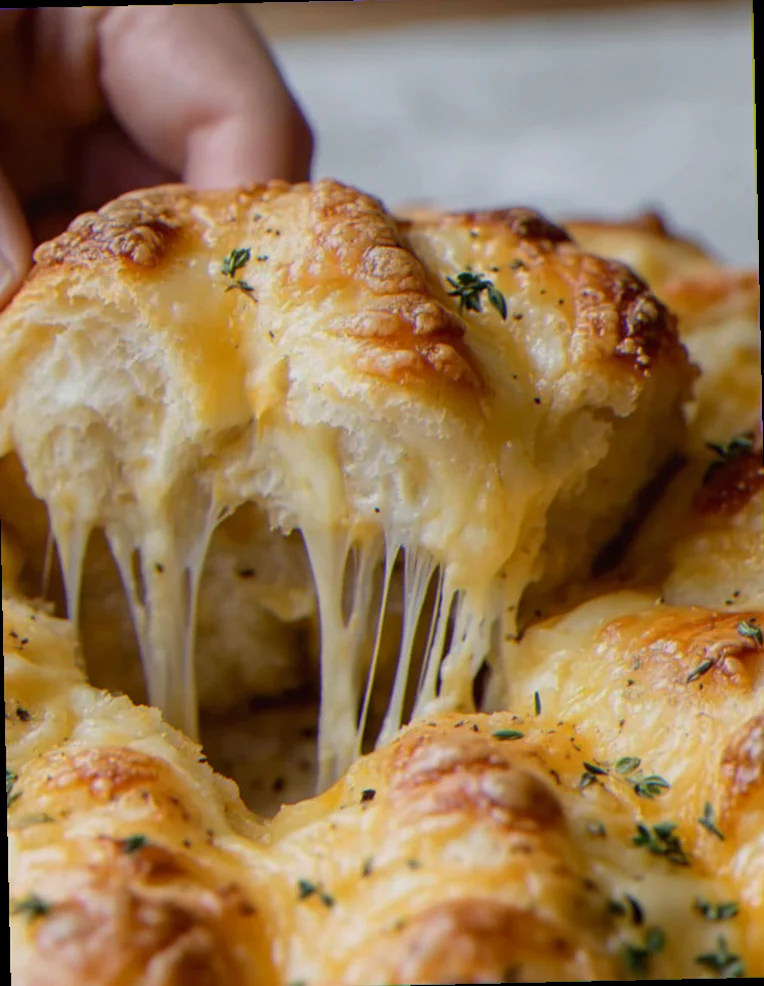
The magic of Pull Apart Bread lies in its inimitable texture: an airy, tender crumb that yields effortlessly, contrasting with a golden, slightly crisp exterior. This delightful baked good, with roots in both European and American culinary traditions, achieves its signature chewiness and elasticity through the precise development of a strong yet pliable gluten network, while its characteristic rise is thanks to the diligent fermentation work of yeast. It's a testament to the transformative power of simple ingredients, inviting diners to tear and share, piece by fragrant piece.
Complete Pull Apart Bread Recipe Overview
| Property | Detail |
|---|---|
| Dish entity | Pull Apart Bread |
| Cuisine origin | American (modern form), Hungarian (historical precursor) |
| Defining technique | Yeast dough preparation, individual shaping, communal baking |
| Hero ingredients | All-purpose flour, active dry yeast, whole milk |
| Critical ratio | Flour:Liquid (approx. 3:1 by weight); Fat:Flour (approx. 1:4 by weight for a rich dough) |
| Prep time | 45 minutes |
| Cook time | 30-35 minutes at 180°C |
| Rest / chill time | 2-3 hours (proofing) |
| Yield | 1 loaf (10-12 servings) |
| Difficulty | Medium - requires careful handling of yeast dough and attention to proofing stages. |
Ingredients: Quantities, Roles, and Critical Ratios
The structural integrity and tender crumb of Pull Apart Bread are built upon a foundation of precise ingredient interactions. The critical ratio of flour to liquid, approximately 3:1 by weight, ensures adequate hydration for gluten development without producing a sticky or overly dense dough. A generous fat-to-flour ratio, around 1:4 by weight in this recipe, contributes to a rich, tender texture that resists staling.
- All-Purpose Flour - 500 grams - Role: Provides the essential protein (glutenin and gliadin) for structure and elasticity, forming the backbone of the bread.
- Active Dry Yeast - 7 grams (1 sachet) - Role: Biological leavening agent; its fermentation produces carbon dioxide, causing the dough to rise and contributing complex flavour notes.
- Whole Milk - 200 ml - Role: Provides liquid for hydrating the flour and activating yeast, while its fat and lactose contribute to richness, tenderness, and browning.
- Granulated Sugar - 75 grams - Role: Food source for yeast, contributes sweetness, aids in browning through caramelisation and Maillard reactions, and tenderises the crumb.
- Unsalted Butter - 125 grams, softened (plus 30g melted for coating) - Role: Enhances flavour, tenderises the dough by interfering with gluten development, and provides richness and moisture.
- Large Egg - 1 unit - Role: Adds richness, colour, helps bind the dough, and contributes to a softer crumb.
- Fine Sea Salt - 8 grams - Role: Flavour enhancer, balances sweetness, and helps control yeast activity, strengthening the gluten network.
- Cinnamon (ground) - 10 grams - Role: Aromatic spice for flavour (for sweet variation).
- Brown Sugar - 50 grams - Role: Adds caramel-like sweetness and moisture to the coating (for sweet variation).
The Science of Gluten Development and Yeast Fermentation
The hallmark texture of Pull Apart Bread - its soft, elastic, and airy crumb - is a direct result of two fundamental food science principles: gluten development and yeast fermentation. All-purpose flour contains two primary proteins: gliadin and glutenin. When flour is hydrated with liquid (milk in this case) and subjected to mechanical work (kneading), these proteins link together to form a complex, elastic network known as gluten. This gluten network acts like a stretchy matrix, capable of trapping the carbon dioxide gas produced by the yeast. The butter and egg in this recipe, being fats, actually help tenderise the gluten network by coating the protein strands, preventing them from forming overly tight bonds, which results in a softer, more delicate crumb.
Simultaneously, the active dry yeast (Saccharomyces cerevisiae) is a living microorganism that, when activated by warm liquid and fed by sugar, begins the process of alcoholic fermentation. It metabolises the sugars present in the dough (from the granulated sugar and lactose in the milk), producing carbon dioxide gas and ethanol. The carbon dioxide is then captured by the elastic gluten network, causing the dough to expand and rise - a process known as proofing. The ethanol evaporates during baking, contributing to the bread's aroma. The warmth of the milk and subsequent proofing temperatures are critical; too hot, and the yeast dies; too cold, and its activity is sluggish, leading to a poor rise. This symbiotic relationship between gluten development and yeast activity is what gives Pull Apart Bread its signature structure and airy mouthfeel.
Method: Yeast Dough Preparation at Every Critical Stage
This method is optimised to ensure maximum flavour development and a consistently tender, well-risen bread by respecting the delicate balance of yeast activity and gluten structure.
- Activate - Yeast: In a small bowl, combine the 200 ml whole milk (warmed to 40-45°C) with 10 grams of granulated sugar and the 7 grams of active dry yeast. Stir gently and let stand for 5-10 minutes until foamy, indicating the yeast is active and alive.
- Combine - Dry Ingredients: In a large mixing bowl, whisk together the 500 grams all-purpose flour, remaining 65 grams granulated sugar, and 8 grams fine sea salt. This ensures even distribution of salt, which controls yeast activity and flavours the dough.
- Mix - Dough: Pour the activated yeast mixture, 1 beaten large egg, and 125 grams softened unsalted butter (cut into cubes) into the dry ingredients. Mix with a wooden spoon or stand mixer with a dough hook until a shaggy dough forms.
- Knead - Gluten Development: Turn the dough out onto a lightly floured surface. Knead for 8-10 minutes by hand, or 6-8 minutes with a stand mixer on medium speed, until the dough is smooth, elastic, and passes the "windowpane test" - a small piece can be stretched thinly enough to see light through without tearing. This is a critical control point: under-kneading results in a dense, crumbly bread due to insufficient gluten development, while over-kneading can tear the gluten network, making the dough tough. If it's too sticky, add flour sparingly, 5g at a time.
- First Proof - Bulk Fermentation: Lightly grease a clean bowl with oil. Place the kneaded dough in the bowl, turning once to coat. Cover with plastic wrap or a damp tea towel. Let rise in a warm place (24-27°C is ideal) for 1-1.5 hours, or until doubled in size. The dough should feel airy and spring back slowly when poked gently.
- Prepare - Coating (Sweet): In a shallow dish, combine 50 grams brown sugar and 10 grams ground cinnamon. Melt 30 grams unsalted butter in a separate small bowl.
- Shape - Individual Pieces: Gently punch down the dough to release excess gas. Turn it onto a lightly floured surface and roll into a rectangle (approx. 30x40 cm). Cut the dough into roughly 36-40 small squares (approx. 4x4 cm). Dip each square first into the melted butter, then into the cinnamon-sugar mixture, ensuring it's well coated.
- Layer - Loaf Pan: Arrange the coated dough squares vertically in a greased 23x13 cm loaf pan, overlapping them slightly like dominoes. Pack them gently but not too tightly.
- Second Proof - Final Rise: Cover the loaf pan with plastic wrap or a damp tea towel. Let rise in a