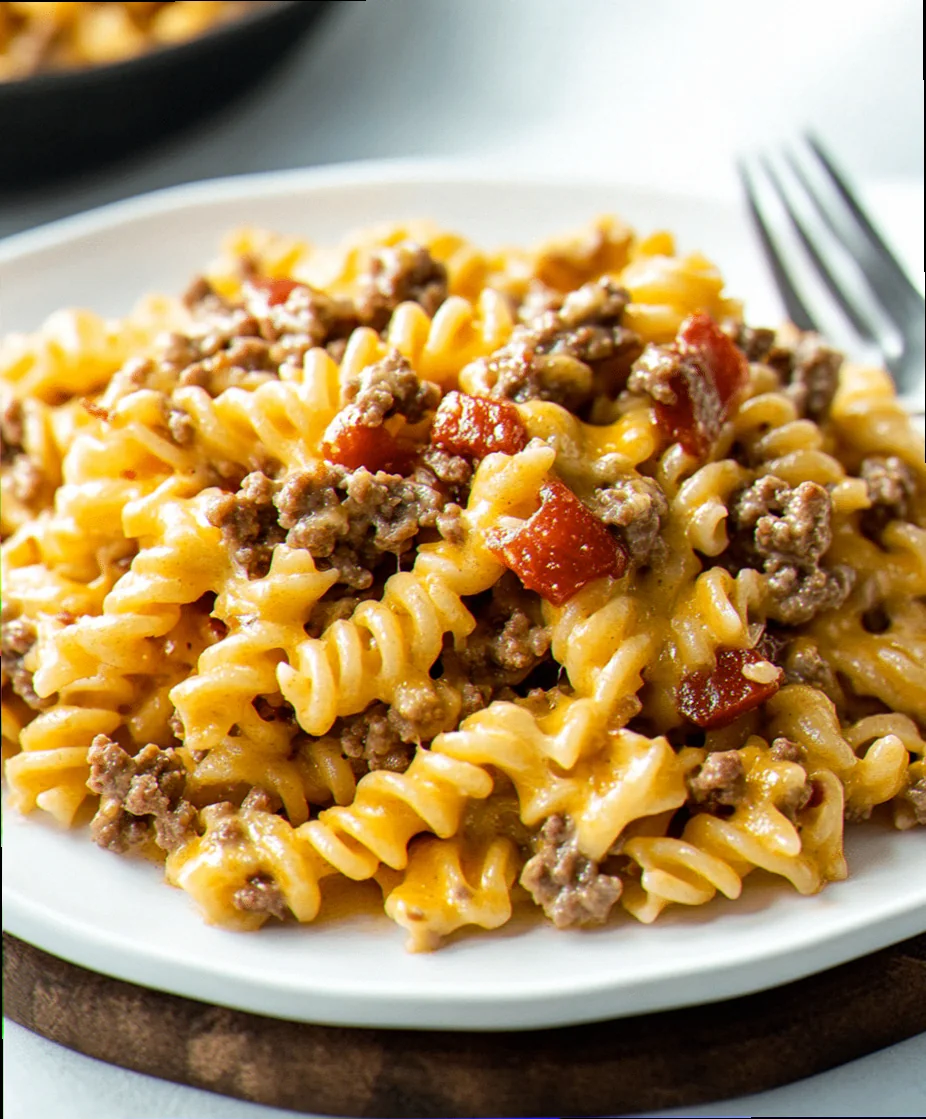
The magical transformation within a cheeseburger pasta occurs when the rich, savory proteins of ground beef undergo the Maillard reaction, creating complex, toasted flavors, while the starch from the pasta releases gelatin, thickening the sauce and binding it to every noodle. This dish, a beloved American comfort food, embodies the spirit of playful adaptation, taking the core components of a classic burger and reimagining them in a hearty, one-pan pasta format.
Complete Recipe Overview
| Property | Detail |
|---|---|
| Dish entity | Cheeseburger Pasta |
| Cuisine origin | American Fusion |
| Defining technique | Sauté and Simmer |
| Hero ingredients | Ground Beef, Pasta, Cheese Sauce |
| Critical ratio | 1:1:0.5 (Ground Beef : Pasta : Sauce Liquid) |
| Prep time | 15 minutes |
| Cook time | 30 minutes at 190°C |
| Rest / chill time | 5 minutes rest |
| Yield | 4-6 servings |
| Difficulty | Easy - relies on straightforward sautéing and simmering techniques. |
Ingredients: Quantities, Roles, and Critical Ratios
The structural integrity and flavor profile of cheeseburger pasta are built upon a foundation of classic burger elements, balanced to create a cohesive, pasta-centric experience. The critical ratio of 1:1:0.5 for ground beef to pasta to sauce liquid is paramount. This ensures that the pasta is not overly soupy or too dry, with enough liquid to cook the pasta through while creating a rich, emulsified sauce that clings to each piece.
- Ground Beef (80/20 lean-to-fat ratio) - 450g - Role: Provides the savory, umami foundation and a rich mouthfeel. The fat renders and crisps, adding texture and flavor.
- Elbow Macaroni (or similar small pasta shape) - 450g - Role: The starchy backbone, absorbing flavors and providing the chewy texture.
- Cheese Sauce Base (e.g., cream cheese, milk, cheddar) - 350g - Role: Creates the signature creamy, cheesy coating.
- Yellow Onion, finely diced - 120g - Role: Adds aromatic depth and subtle sweetness.
- Garlic, minced - 3 cloves (approx. 15g) - Role: Intensifies the savory profile.
- Diced Tomatoes (canned, drained) - 400g - Role: Adds a touch of acidity and moisture to the sauce.
- Beef Broth - 240ml - Role: Provides liquid for pasta cooking and enhances beef flavor.
- Ketchup - 60ml - Role: Contributes sweetness, tang, and a classic burger condiment note.
- Mustard (yellow) - 15ml - Role: Adds a sharp, tangy counterpoint to the richness.
- Worcestershire Sauce - 15ml - Role: Deepens the umami complexity.
- Salt - 5g (or to taste) - Role: Enhances all other flavors.
- Black Pepper, freshly ground - 2g (or to taste) - Role: Adds a pungent bite.
- Optional Toppings: Shredded cheddar cheese, diced pickles, diced tomatoes, chopped parsley.
The Science of Ground Beef Browning (Maillard Reaction)
The transformation of raw ground beef into its deeply flavorful, browned state is a testament to the Maillard reaction, a complex non-enzymatic browning process. This cascade of chemical reactions occurs between amino acids and reducing sugars at temperatures above 140°C. As the beef heats, water evaporates, allowing these components to interact, forming hundreds of new flavor compounds, including pyrazines, furans, and thiophenes, which are responsible for the characteristic savory, roasted, and nutty notes of well-browned meat. The fat within the 80/20 blend also plays a crucial role, acting as a heat conductor and contributing to crisping and flavor development through its own unique browning reactions and by carrying fat-soluble flavor molecules.
Method: Sauté and Simmer at Every Critical Stage
The method for cheeseburger pasta is optimized for a single pan to maximize flavor infusion and minimize cleanup, by building layers of flavor through sautéing and then allowing the pasta to cook directly in the developed sauce.
- Sauté - Aromatics and Beef: Heat a large, oven-safe skillet or Dutch oven over medium-high heat. Add the ground beef and break it apart. Cook, stirring occasionally, until browned and no pink remains, about 7-10 minutes. Drain off excess fat, leaving about 15ml in the pan. Add the diced onion and minced garlic to the pan and sauté until softened and fragrant, about 3-4 minutes.
- Deglaze and Build Sauce - Critical Control Point 1: Pour in the beef broth and scrape up any browned bits from the bottom of the pan. This is crucial for capturing all the flavor developed during the browning stage. Add the diced tomatoes, ketchup, mustard, Worcestershire sauce, salt, and pepper. Stir to combine.
- Simmer - Pasta Infusion: Bring the mixture to a simmer. Add the dry elbow macaroni to the simmering sauce. Ensure the pasta is mostly submerged.
- Bake - Melding Flavors: Cover the skillet tightly with a lid or aluminum foil. Transfer to a preheated oven at 190°C and bake for 20-25 minutes, or until the pasta is al dente and has absorbed most of the liquid.
- Melt Cheese - Critical Control Point 2: Remove the skillet from the oven. Stir in the cheese sauce base (cream cheese and shredded cheddar). Stir vigorously until the cheese is fully melted and creates a creamy, cohesive sauce coating the pasta. This is the most common failure point; if the sauce doesn't melt smoothly, it may be due to insufficient liquid or not enough stirring. Ensure the cheese is at room temperature if possible.
- Rest and Serve: Let the cheeseburger pasta rest, uncovered, for 5 minutes. This allows the sauce to thicken slightly and the flavors to meld. Garnish with optional toppings like shredded cheddar, diced pickles, or fresh parsley before serving.
Cultural and Historical Context of American Fusion
Cheeseburger pasta is a modern invention born from the American love for comfort food and culinary experimentation. While its exact origins are difficult to pinpoint, it emerged as a popular dish in the late 20th and early 21st centuries, likely as home cooks sought to recreate the beloved flavors of a cheeseburger in a more substantial, family-friendly pasta format. It represents a quintessential example of American Fusion cuisine, blending the iconic elements of a classic American hamburger with the versatility and global appeal of Italian pasta.
Variations Across American Regional Styles
- Tex-Mex Inspired: Incorporate a can of diced green chilies or jalapeños into the sauce for a spicy kick. A sprinkle of chili powder or cumin during the sauté stage also enhances this profile.
- Smoky BBQ Twist: Use a BBQ sauce in place of some of the ketchup and add a tablespoon of smoked paprika to the beef as it browns. A drizzle of extra BBQ sauce over the finished dish adds another layer.
- Vegetarian Adaptation: Substitute crumbled plant-based ground meat for the beef. Ensure the broth used is vegetable broth. For a dairy-free version, use a cashew-based cheese sauce and a plant-based milk.
- Gourmet Upgrade: Use a higher-quality ground beef blend (like chuck and brisket), add sautéed mushrooms and caramelized onions, and finish with a mix of Gruyère and sharp cheddar cheese.
Storage, Freezing, and Reheating Cheeseburger Pasta
Cheeseburger pasta stores reasonably well, though some textural changes are to be expected. Store cooled pasta in an airtight container in the refrigerator for up to 3 days. For freezing, portion the cooled pasta into freezer-safe containers or bags, removing as much air as possible, and freeze for up to 2 months. Reheat refrigerated pasta gently in a saucepan over low heat with a splash of milk or broth, stirring until heated through (approximately 5-7 minutes). Frozen pasta should be thawed overnight in the refrigerator before reheating using the same method. Expect the pasta to be slightly softer and the sauce to be a bit more liquidy after reheating.
Pairing Cheeseburger Pasta: Sides, Sauces, and Drinks
To complement the rich, savory profile of cheeseburger pasta, consider serving it with a simple, crisp side salad dressed with a vinaigrette to cut through the richness. Alternatively, a side of seasoned sweet potato fries offers another nod to classic burger accompaniments. For beverages, a crisp lager or an amber ale provides a refreshing contrast with its carbonation and slight hoppiness. For a non-alcoholic option, a tart lemonade or a classic cola offers a sweet and acidic balance.
Answers to the Most-Searched Questions About Cheeseburger Pasta
What temperature should Cheeseburger pasta be cooked at - and how do I know it's done?
The cheeseburger pasta is baked at 190°C. It is done when the pasta is al dente (tender but with a slight bite) and has absorbed most of the liquid, typically after 20-25 minutes of baking time. You can check for doneness by carefully removing a piece of pasta with a fork and tasting it. The cheese should be fully melted and coating the pasta.
What is the difference between Cheeseburger pasta and a traditional Cheeseburger?
The fundamental difference lies in their format and primary starch. A traditional cheeseburger features a beef patty served on a bun with cheese and toppings. Cheeseburger pasta, conversely, deconstructs these elements, incorporating the flavors of the beef and cheese into a creamy sauce that coats pasta, transforming the meal into a hearty, one-dish pasta casserole.
Can Cheeseburger pasta be made in advance, and does it freeze well?
Yes, cheeseburger pasta can be made in advance and freezes reasonably well. While it can be refrigerated for up to 3 days and reheated, the texture of the pasta may soften. For longer storage, freezing in airtight containers for up to 2 months is recommended, though expect a slight change in pasta texture and sauce consistency upon reheating. Reheat gently on the stovetop with added liquid.